About ten years ago, I had already had the chance to discover Nausicaá (in French), in Boulogne-sur-Mer, and I still had a few memories of its huge tanks and its astonishing residents. Since then, France’s National Sea Centre has been extended and modernised, and I was really keen to go back, this time with my two little girls, aged five and two and a half.
Much like outer space, the underwater world is fascinating. Beneath the surface lies a whole universe of which we really only know a tiny part (I believe we have explored only around 10% of the ocean floor), inhabited by creatures that are sometimes minuscule, sometimes gigantic, unsuspected landscapes and ecosystems as rich as they are fragile. A mysterious world that never stops feeding our curiosity and imagination, and one whose wonders I wanted to share with my daughters.
Located on the Opal Coast, around 2 hours 30 minutes from Paris by car and just over half an hour from the Channel Tunnel terminal near Calais, Nausicaá is the largest aquarium in Europe. Far more than a place to watch fish, the centre aims to make visitors of all ages aware of the richness of the seabed, the role the oceans play in keeping our planet in balance and the need to protect them. Here, that mission takes the form of an immersive journey, combining giant aquariums, interactive discoveries and encounters with the animals.
Making the most of a weekend by the sea, and encouraged by several friends who had recently visited with their young children, I decided to spend the first day of the girls’ school holidays exploring Nausicaá.
What is there to see at Nausicaá? How long should you allow for your visit? Is it a good day out with young children, and is the ticket price worth it? Here is my experience, my favourite moments and all my tips to help you plan your visit to the Boulogne-sur-Mer aquarium.
🌊 Extend your trip on the Opal Coast
Fancy discovering more gems in the region?
Find my ideas for visits, walks and weekends
in the Pas-de-Calais.
Visiting Nausicaá at a glance
What to see at Nausicaá: three trails to explore the oceans
Walking into Nausicaá, I felt as if I didn’t recognise the place at all! The centre has changed a great deal since my first visit and now features particularly immersive displays, where lighting effects, sets and interactive features all play a full part in the experience.
At the entrance, a member of staff welcomed us, introduced the three main trails and told us about the various sessions scheduled throughout the day. Feeding times, meetings with the keepers, educational workshops and more detailed presentations of the animals all add to the visit and let you learn more about certain species.
Nausicaá is organised around three complementary trails:
- Voyage en Haute Mer (Journey to the High Seas), focusing on the vast open ocean and its inhabitants;
- Des Rivages et des Hommes (Of Shores and People), devoted to marine ecosystems and the relationship between humans and the ocean;
- Dans l’œil du Climat (In the Eye of the Climate), an immersive experience about climate change.
I chose to start with Journey to the High Seas. Despite a few photos and explanations beforehand, my little ones still struggled to imagine what we were about to see. On the way there, my stories about sharks and fish had been met with somewhat muted enthusiasm… but it only took a few minutes for the magic to work and for them to become completely overexcited!
Journey to the High Seas: a fascinating dive among the sharks
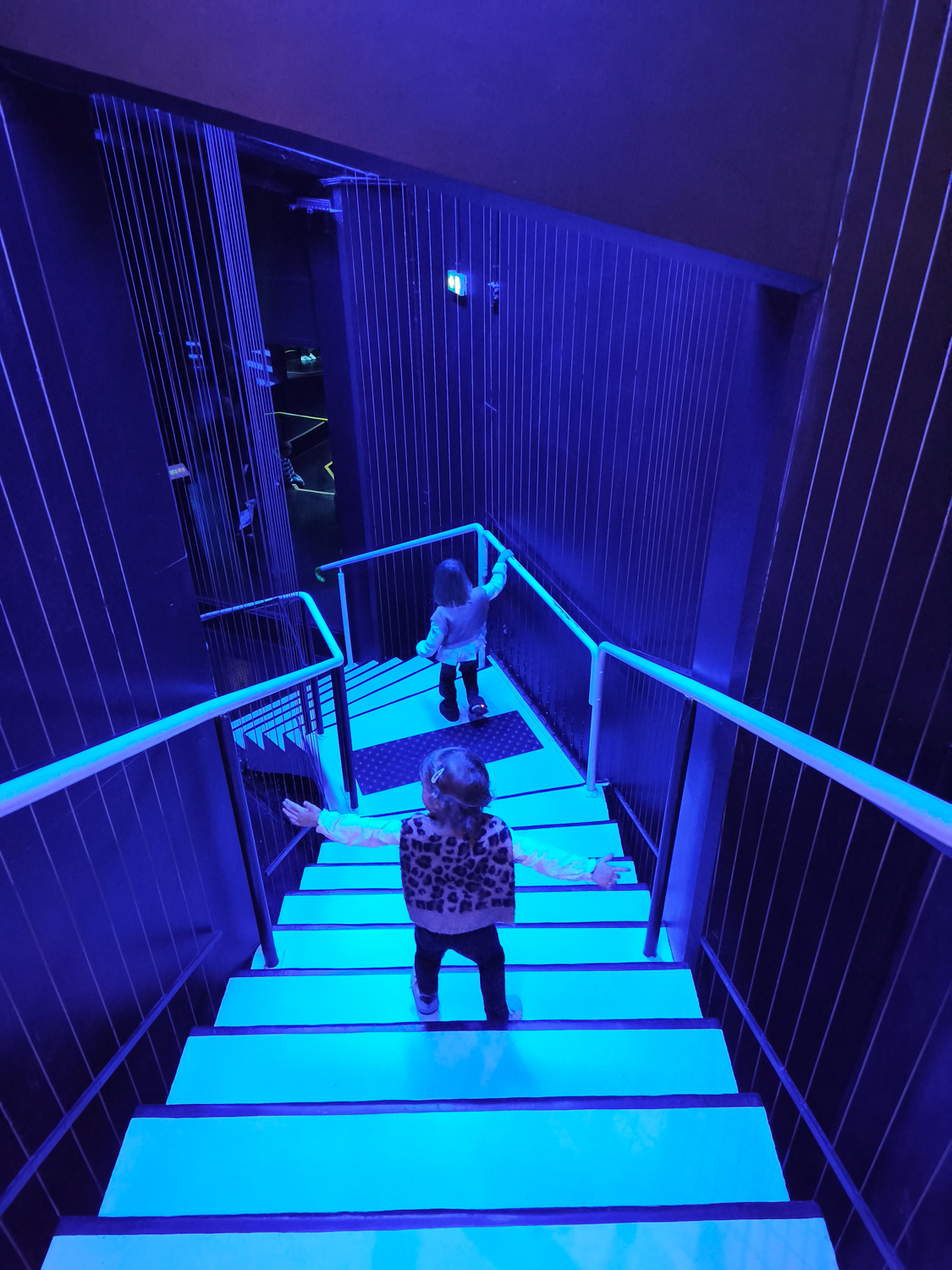
From the very first rooms, you descend into the depths of the ocean! A simulated dive by escalator… leading into a vast space in semi-darkness, lit only by the glow of the colourful aquariums. Behind the glass, the fish seem to move in a world entirely of their own.
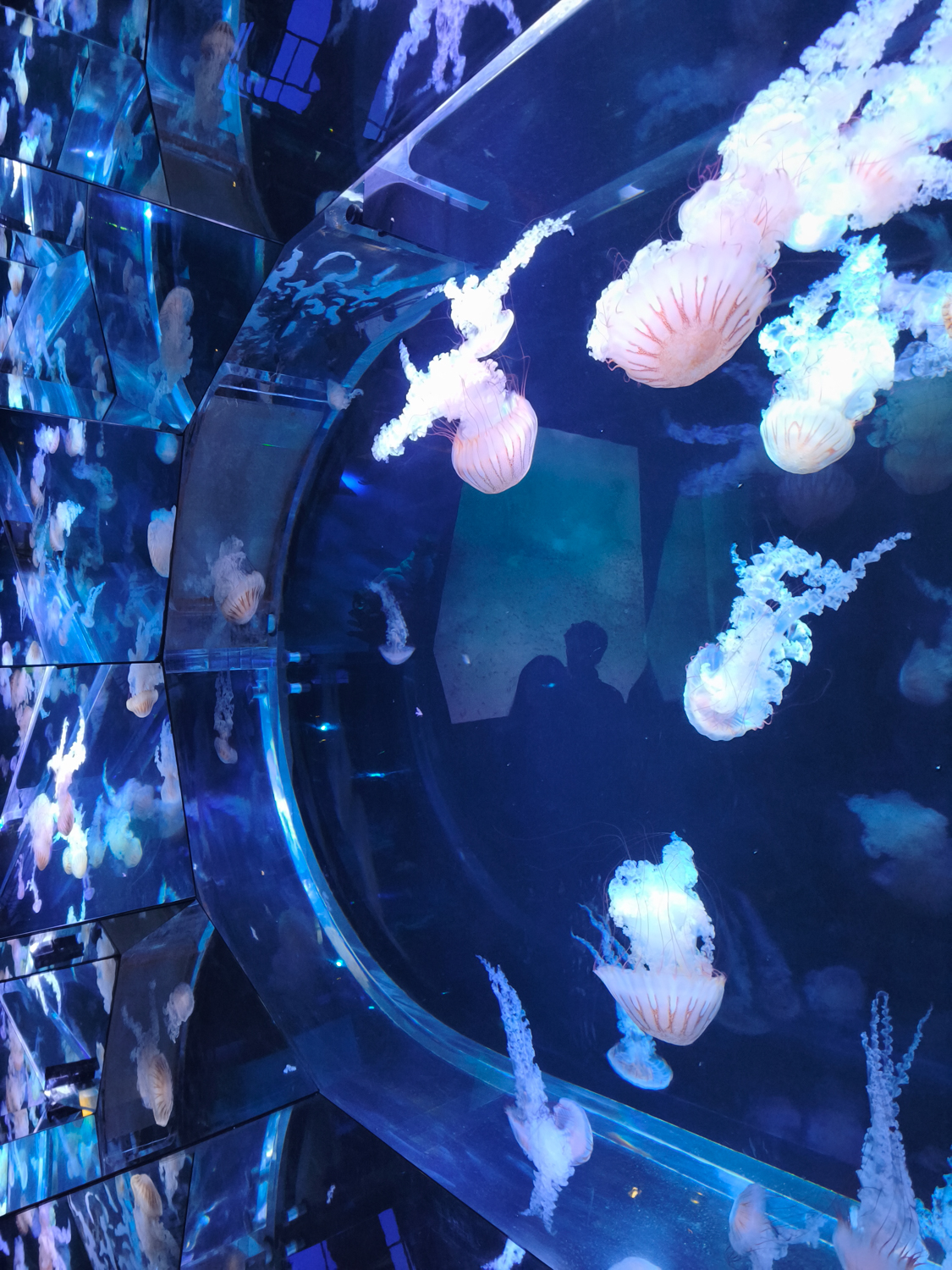
The displays are really well done. The tanks appear sometimes to our left, sometimes to our right, and sometimes even above our heads. The lighting highlights the shapes and colours of the animals, while the surrounding darkness draws all your attention to the show unfolding before your eyes.
A little like screens, the light from the aquariums has an incredible pull on young and old alike. It is a ballet of movement you can hardly tear your eyes away from. Elena and Cléa were spellbound by this almost unreal world 🤍, even though before we arrived they could barely picture what a big aquarium was!
The great High Seas tank, Nausicaá’s must-see
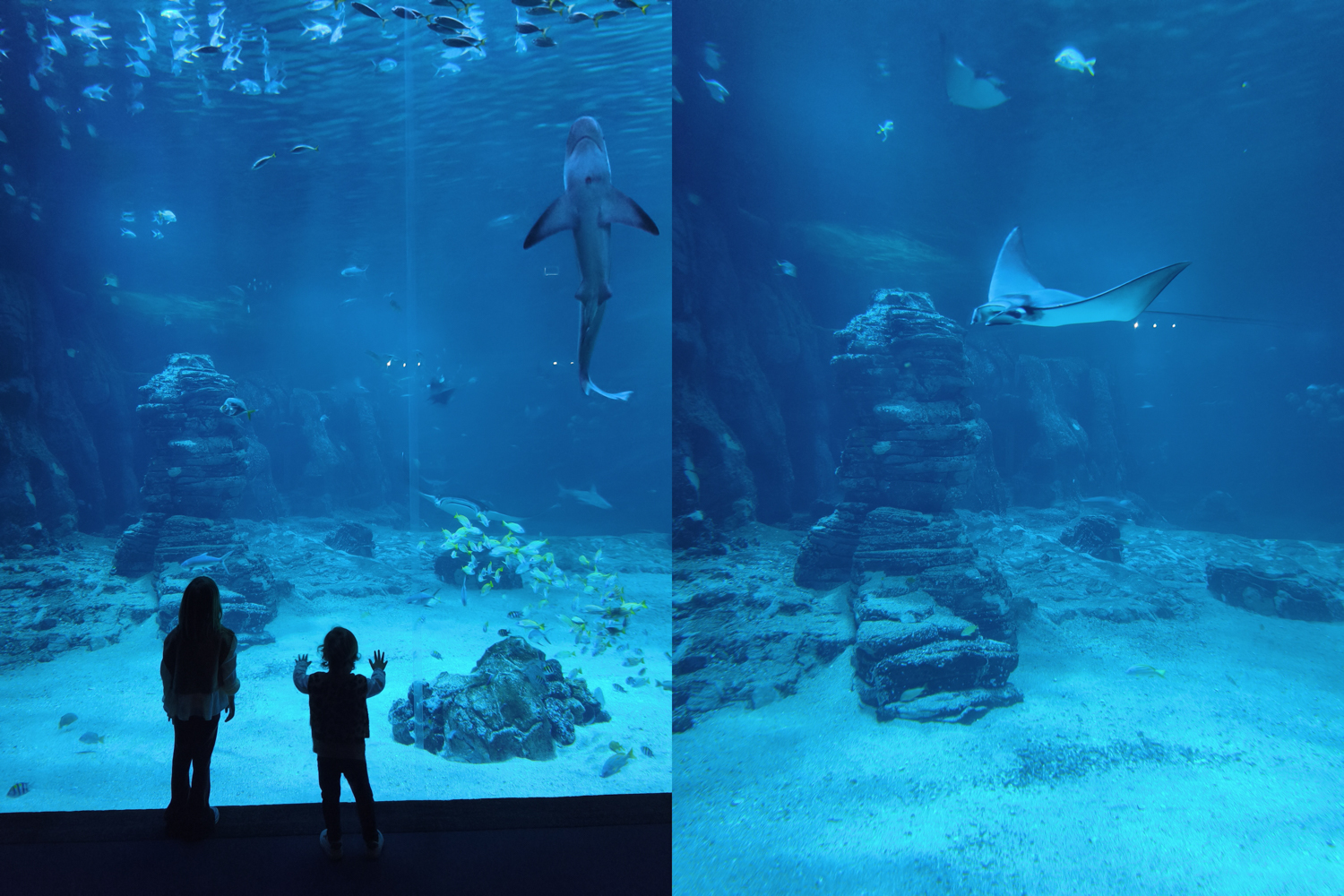
The trail is built around a gigantic tank inspired by the ecosystem of Malpelo Island, off the coast of Colombia. It is undoubtedly one of Nausicaá’s most impressive attractions.
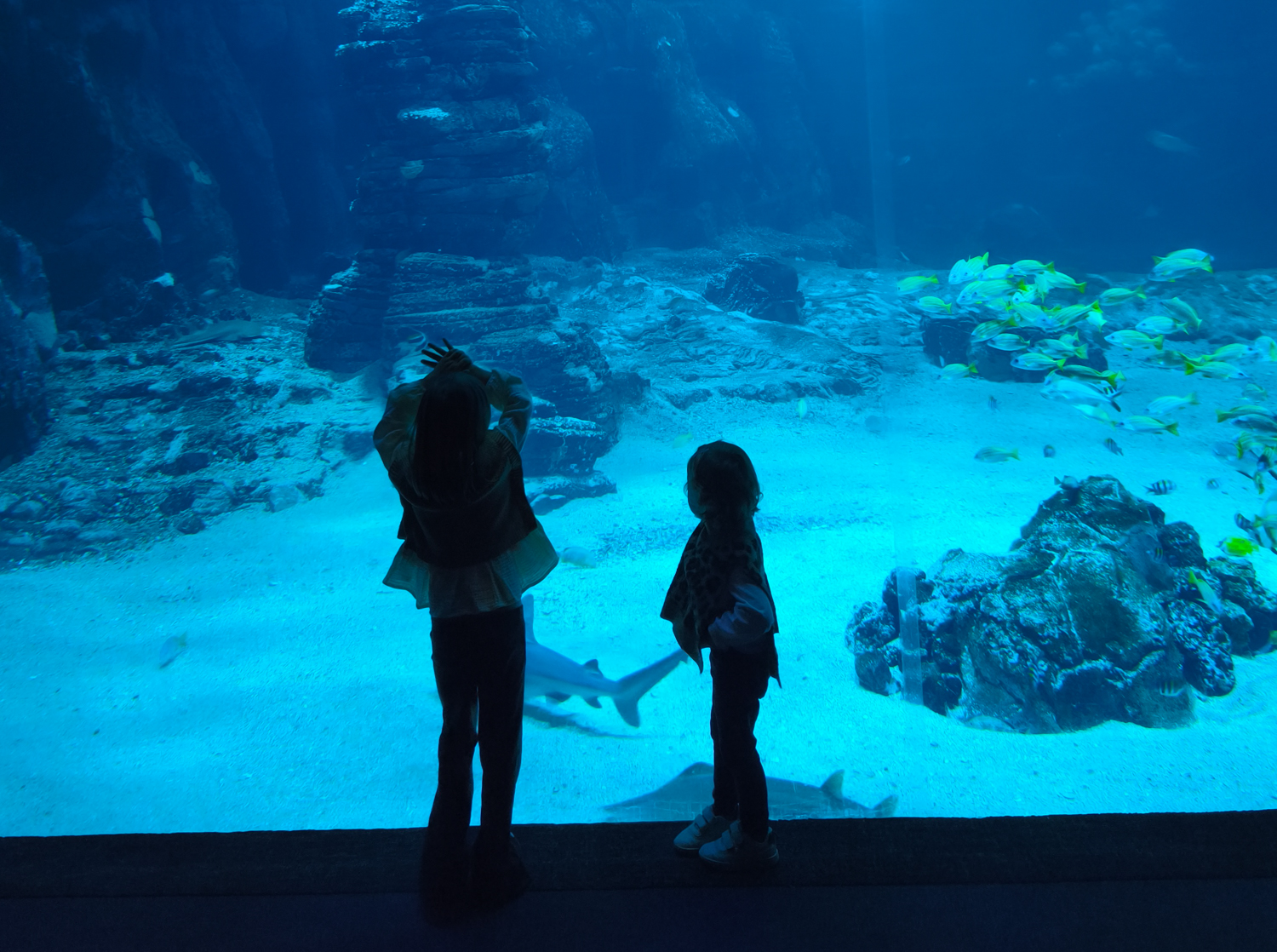
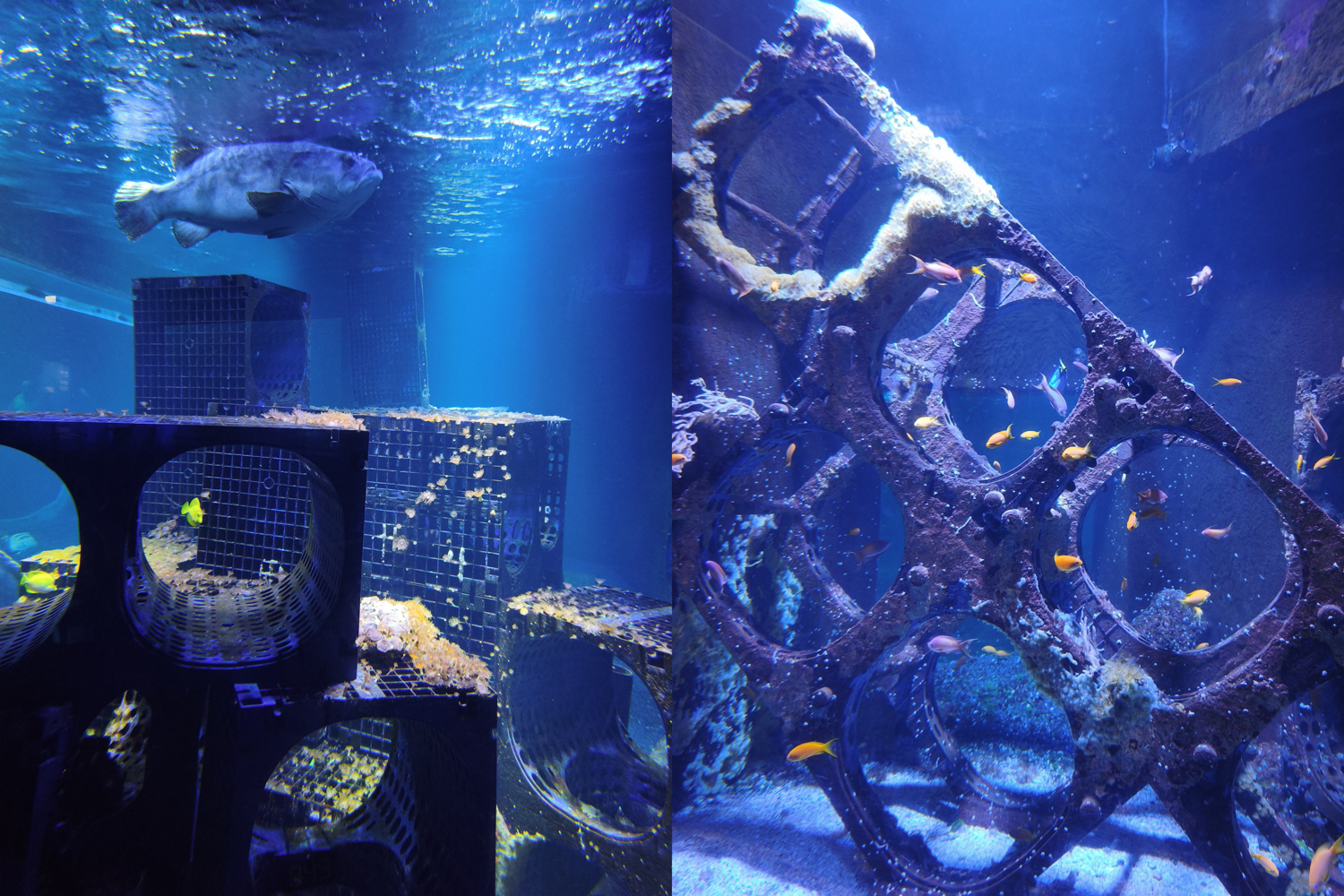
Behind a monumental glass wall, sharks, rays and shoals of fish swim through a setting that seems to stretch on forever. You don’t quite know where to look, there is so much movement to take in. Some species glide slowly, almost majestically, while others rise up from the depths or cross the tank in groups.
The size of the aquarium is impressive in itself, but the feeling of standing in front of a small slice of ocean, with its own life, movements and mysteries… is even more astonishing.
You could easily spend a long time in front of this huge window, opening like a cinema screen onto the marine world, watching the animals go by without ever really tiring of it.
The underwater tunnel: a spectacular experience
I had no memory of the “underwater tunnel” that features so often in Nausicaá’s brochures and photos. My memory isn’t failing me just yet, though: it simply wasn’t open on my first visit! And honestly, it’s a brilliant idea. Walking through the tank, surrounded by water, gives you a completely different view of it and adds to the feeling of immersion. You enter the animals’ territory: they no longer just swim in front of you, they glide all around you…
My youngest told me, quite spontaneously: “Mummy, I love this!”
Of Shores and People: discovering marine ecosystems
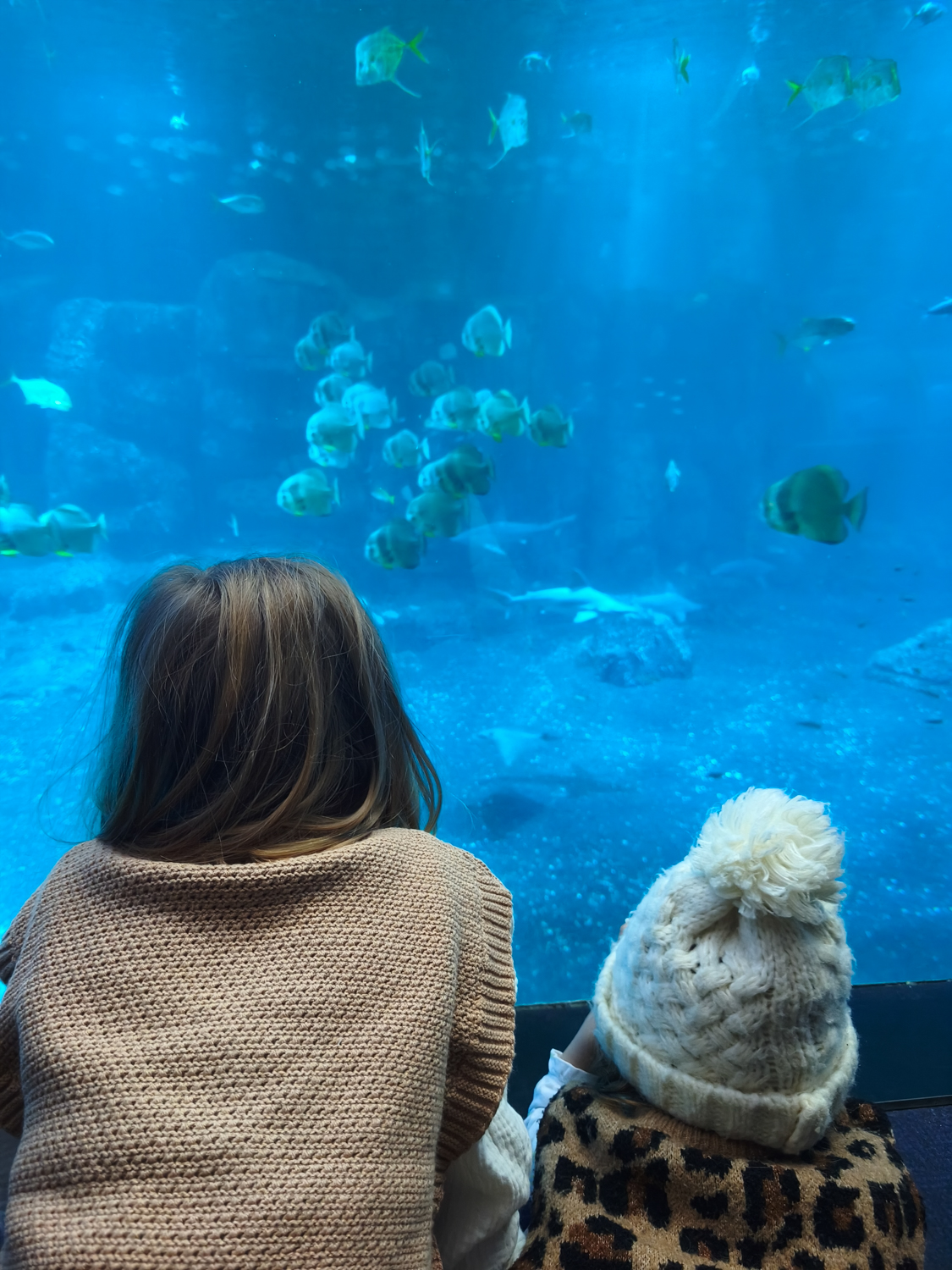
After a lunch break, we continued exploring with the Of Shores and People trail, a journey through different marine environments, from the waters of the North Sea to the Californian coast, not forgetting tropical seascapes.
This second part invites you to look at the oceans a little differently. Beyond the animals that live there, you learn about the links between species and their environment, and the sometimes unsuspected importance of certain organisms, such as plankton or coral. Environmental issues are also addressed, highlighting how precious and vulnerable marine life is.
The various tanks let you observe new species and understand the diversity of their habitats. You move from one environment to another, discovering fish with sometimes surprising shapes, colourful settings and highly complex ecosystems.
The Californian sea lions: one of my favourite sessions
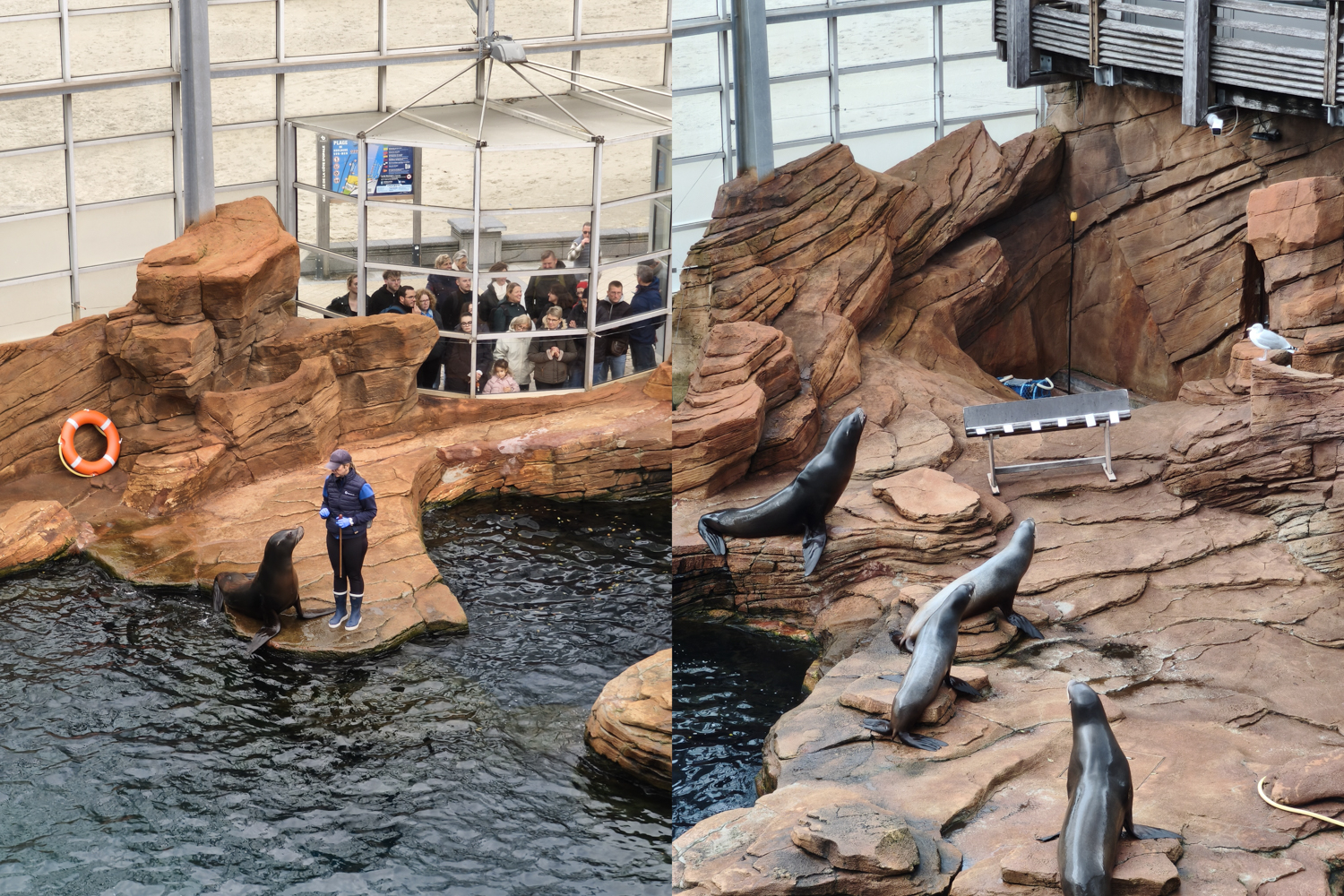
We finished our visit in the area dedicated to the Californian sea lions, where we arrived just in time to watch a “training” session. An unplanned moment that the girls absolutely loved!
While the sea lions performed one exercise after another, the keepers shared a few anecdotes and facts about these sea lions, as impressive as they are intelligent. These sessions also have a genuine medical purpose: they get the sea lions used to being handled and make their monthly veterinary check-ups easier.
The girls didn’t miss a second of it, amused by the animals’ movements and reactions. As for me, I found the presentation as interesting as it was fun to watch, with explanations that even the youngest could follow.
A lovely interlude that I recommend you don’t miss if it’s on during your visit! Remember to check the times of the day’s sessions as soon as you arrive.
In the Eye of the Climate: an immersive experience about the oceans
Nausicaá also offers a third trail, In the Eye of the Climate, devoted to the consequences of climate change for the oceans and, more broadly, for our planet.
It includes a large 430 m² immersive room, where visitors are surrounded by 360-degree projections designed to raise awareness of the changes affecting our environment and the challenges the marine world now faces.
However, I didn’t get the chance to see this area during my visit. After several hours on the first two trails, my daughters were starting to flag, especially my youngest, who still usually has long afternoon naps.
So I preferred to stop there rather than push our luck and drag the day out at the expense of their enjoyment.
This third trail is nevertheless one more reason to come back to Nausicaá, perhaps when they are a little older! 🙂
Visiting Nausicaá with children: a day out I recommend from a very young age
Modern and fun, a visit to Nausicaá is particularly well thought out and well suited to young children.
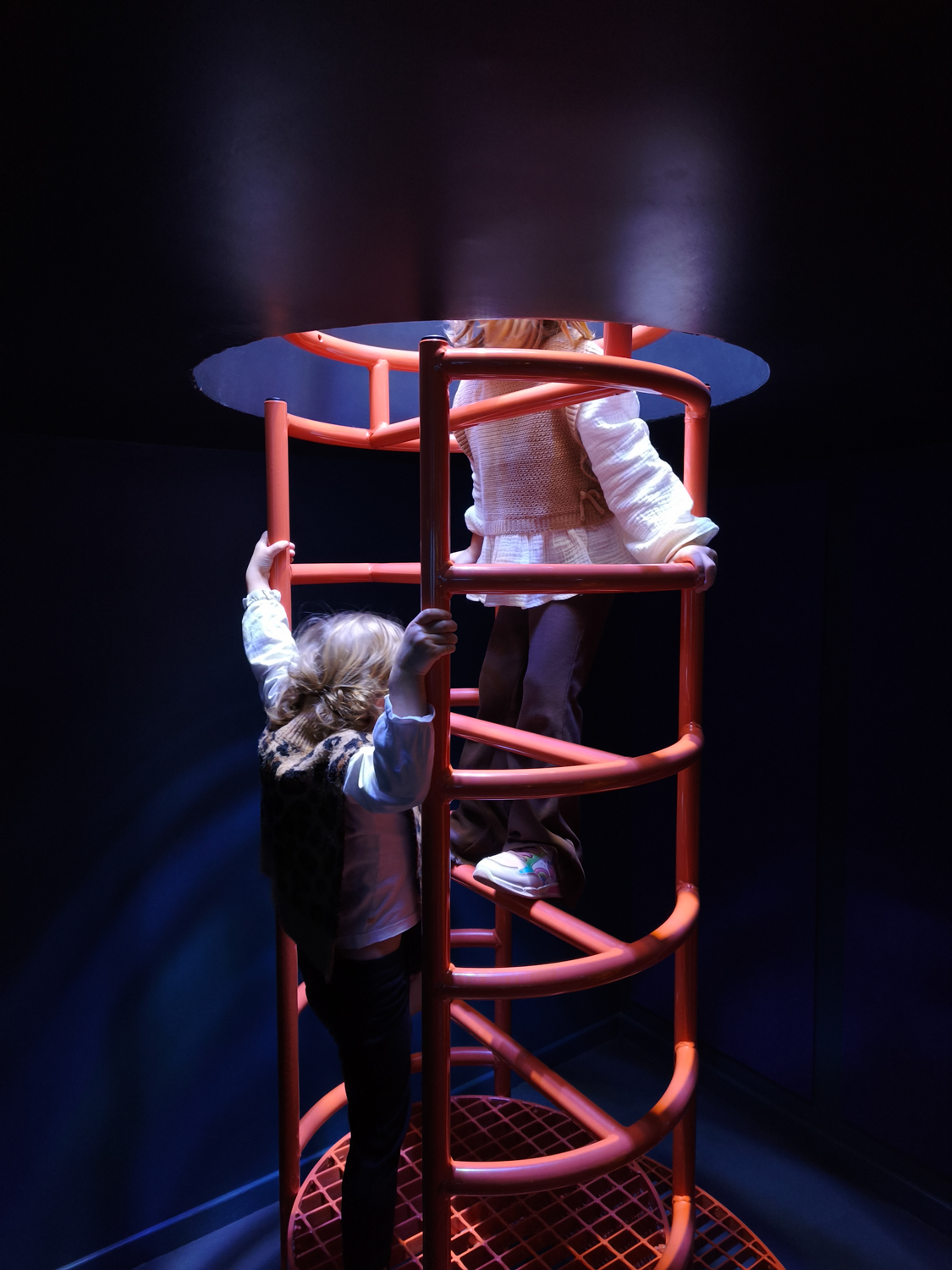
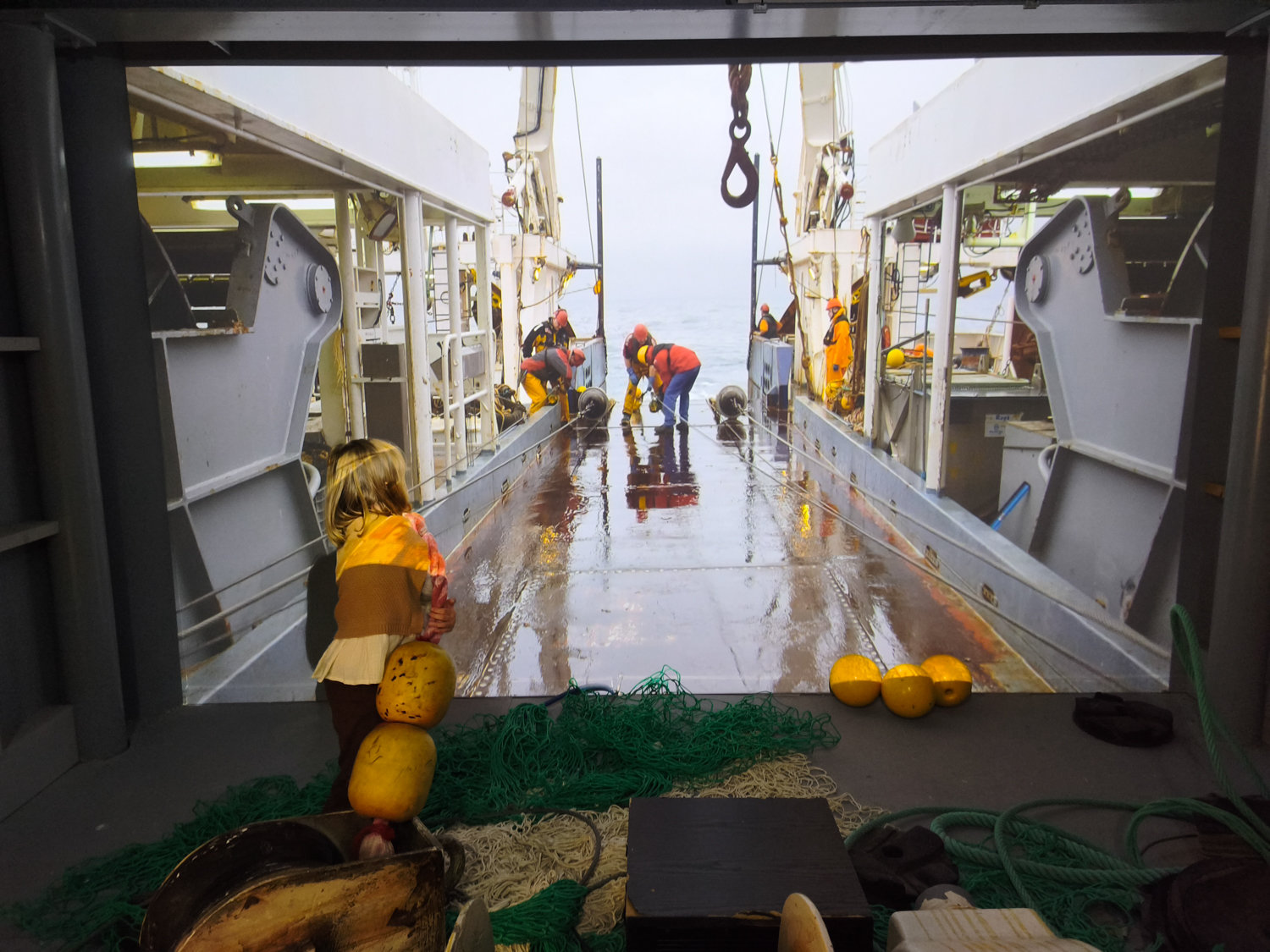
Throughout the exhibitions, small touch screens let you discover the species in the tanks, find out more or identify the fish you are looking at. Elsewhere, there are flaps to lift, questions to answer, things to handle and QR codes leading to little activities… not to mention the immersive recreated spaces, such as the Thalassa boat caught in a storm. A highlight of the day for Elena, who spent a few minutes stepping into the shoes of her sailor grandfather!
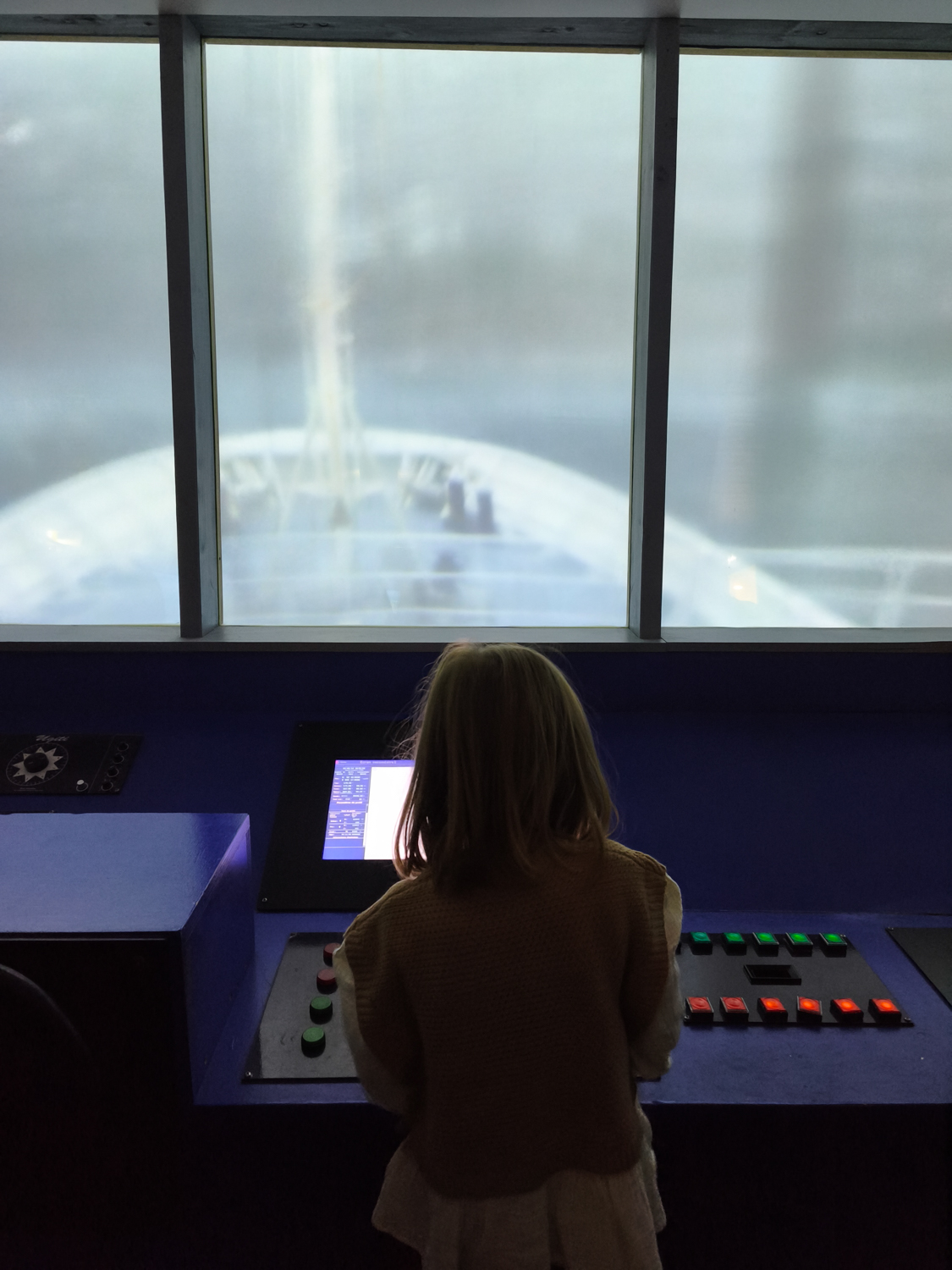
These interactive features nicely break up the trails, vary the experience, spark children’s curiosity and, above all, stop the visit from being just one aquarium after another.
I also appreciated the small areas set up so that families can take a break. There are benches here and there, photo spots and a few play areas where children can catch their breath and relax for a moment before setting off again to explore the deep.
Activities and sessions for all ages
Alongside the trails, Nausicaá runs many sessions throughout the day: fish feeds, meetings with the keepers, sea lion presentations, quizzes and educational workshops.
If you like, you can plan your day around the sessions that interest you most. Personally, with two little girls aged five and two and a half, I preferred to go with the flow and linger in front of the aquariums that caught their attention the most. 🙂
At that age, there’s no need to cram in activities to amaze them: simply watching a shark glide over their heads is more than enough!
♡ My verdict
Nausicaá is an excellent day out with young children, even under-threes.
The little ones will mostly be captivated by the movements and colours of the animals, while older children will get more out of the interactive activities and scientific explanations.
And beyond families, I genuinely think the visit can appeal to all ages.
Where to eat at Nausicaá? My experience at the Calypso Self
The visit can easily take up a whole day, so it’s worth thinking about lunch in advance (even if, personally, I simply improvised!).
Nausicaá has several places to eat, including a cafeteria and fast-food options. You can also bring your own food and use the picnic area.
I chose to have lunch at the cafeteria, which served home-cooked dishes. The girls shared a “moussaillon” (little sailor) kids’ meal for €9, to which I added a small portion of chips. At their age, one kids’ meal between two is usually more than enough.
As for me, I went for a pasta bake with salmon and vegetables. A seasonal, generous and comforting dish that I found really tasty. 🙂
This break gave us a chance to recharge before continuing our exploration of the oceans. 😉
🌊 Enjoying Boulogne-sur-Mer beach after your visit
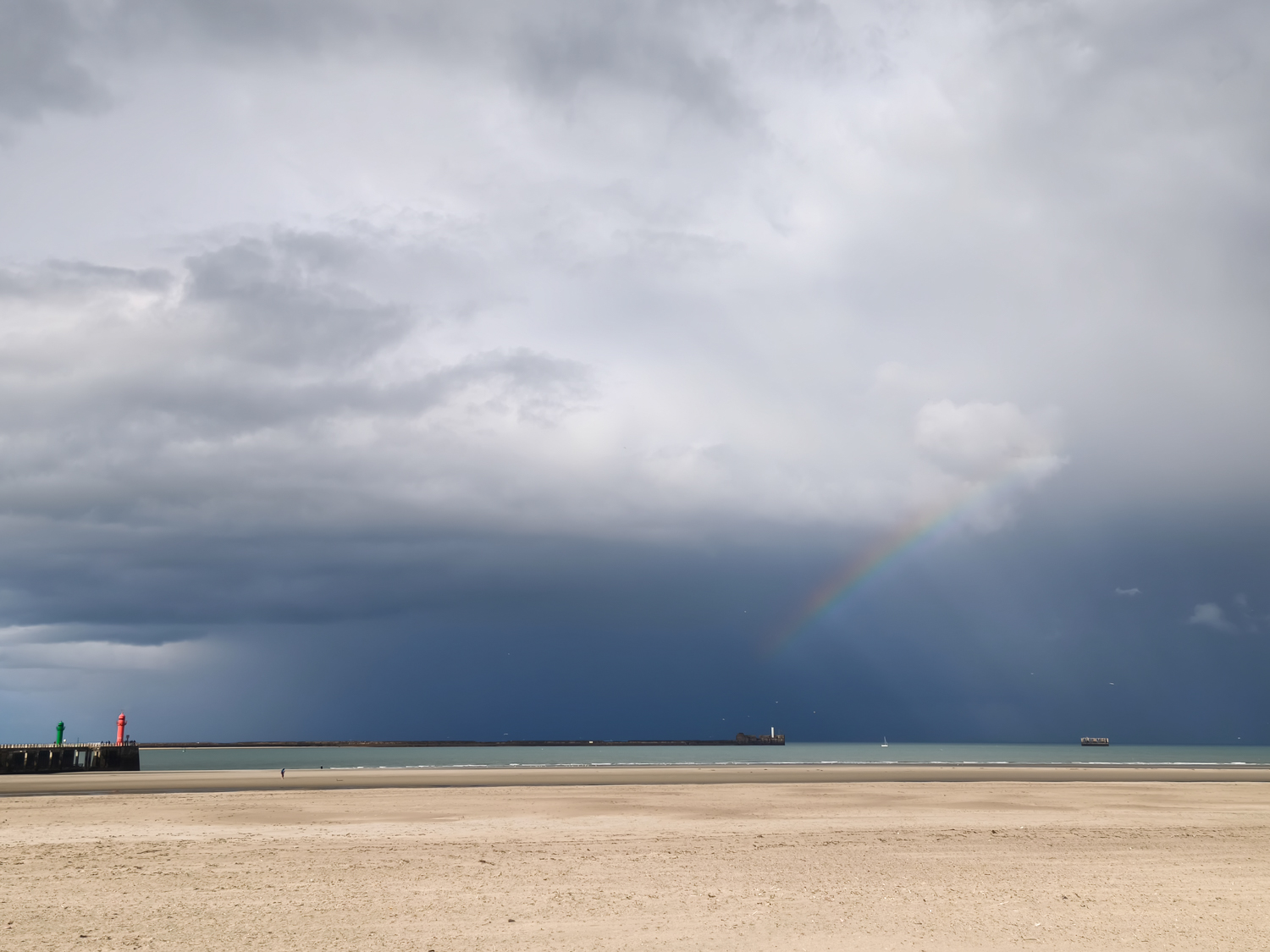
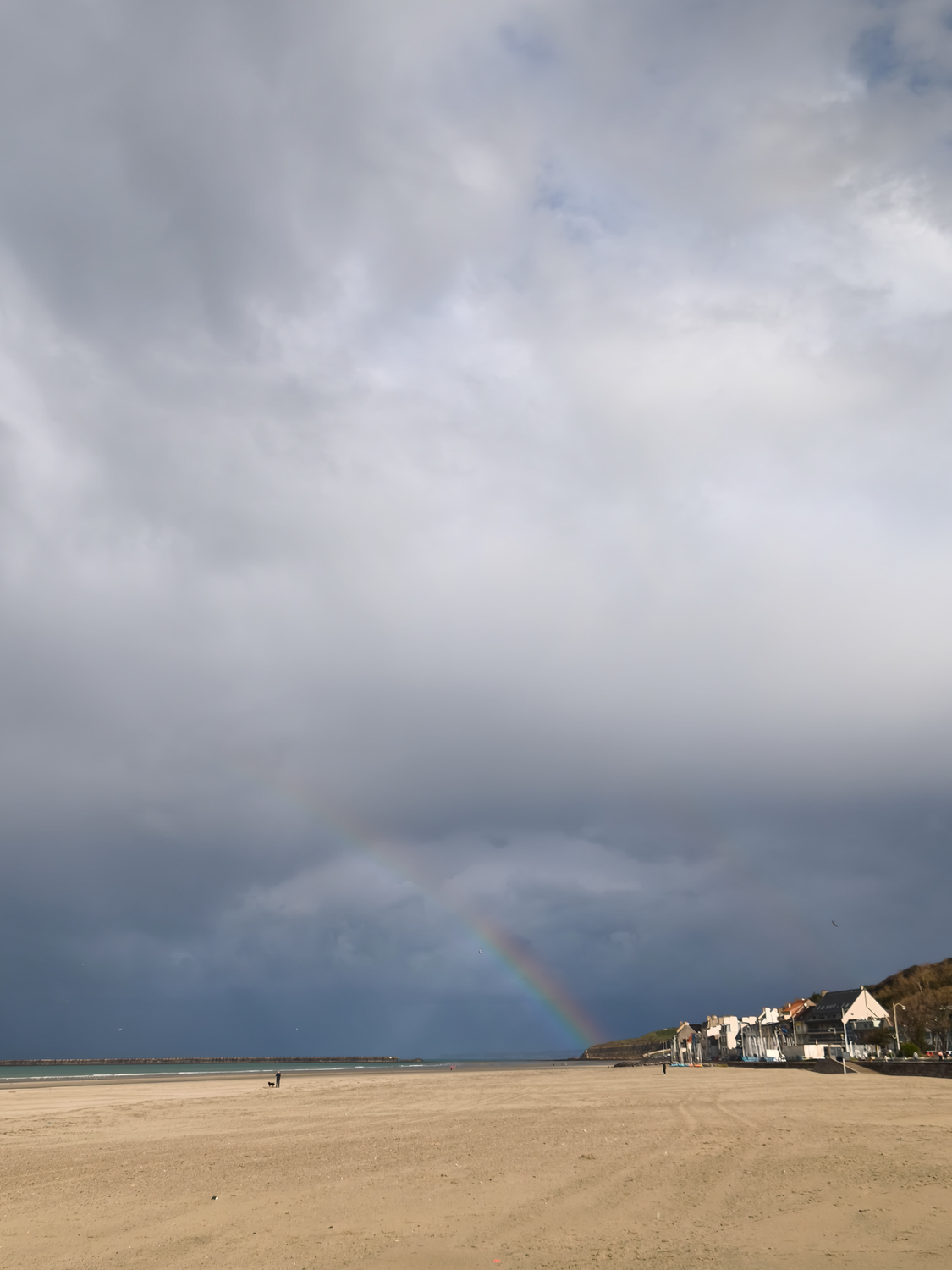
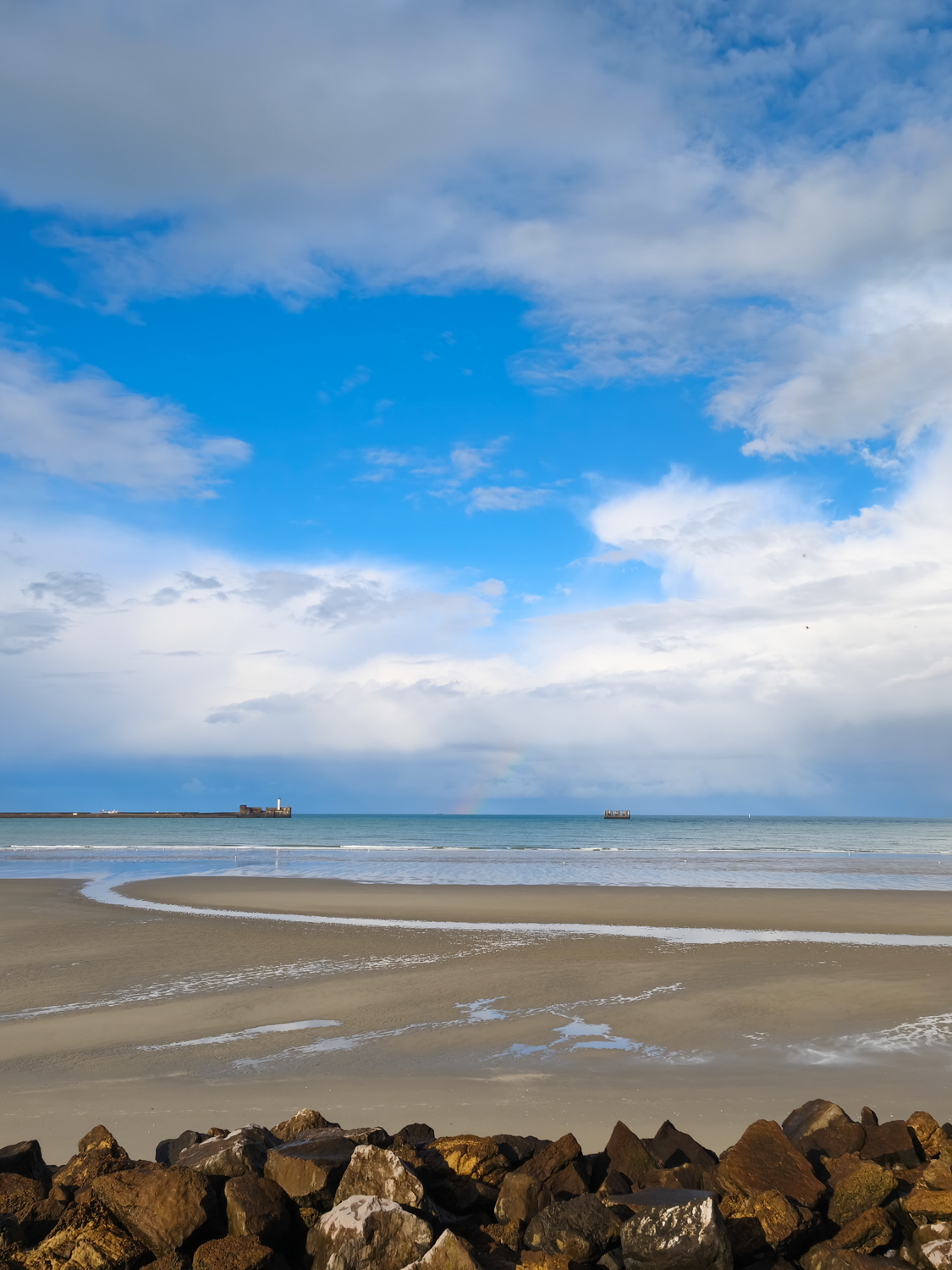
Another big plus of Nausicaá is its location, right on Boulogne-sur-Mer beach.
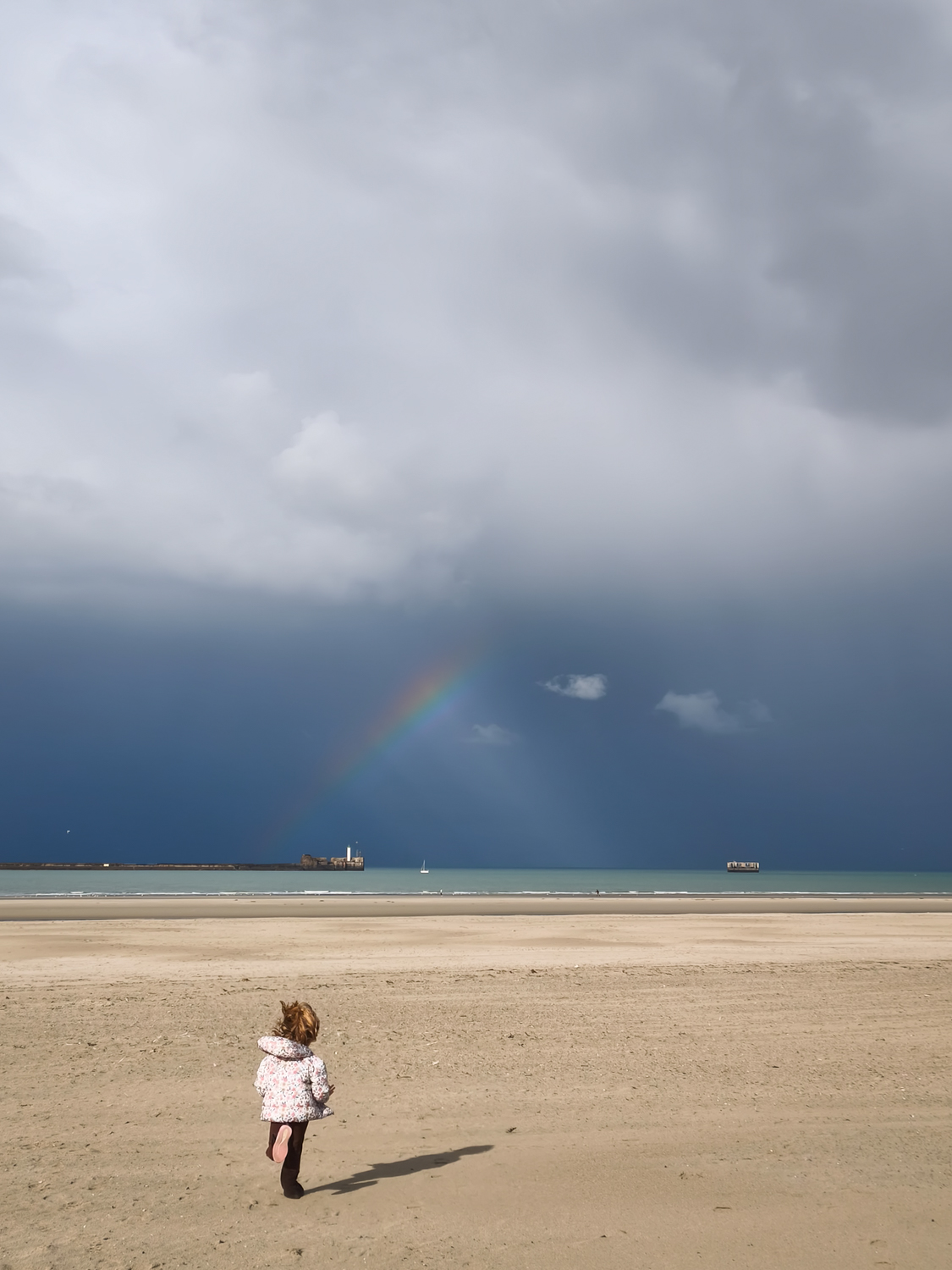
Just a few steps from the centre, you’ll find a vast stretch of sand and large playgrounds where children can climb, run and let off steam after several hours of watching fish. Elena and Cléa loved them!
If the weather allows, it must also be lovely to have a picnic outside with a sea view at lunchtime, before carrying on with your visit.
You do need a bit of luck with the weather, though. Personally, I get the impression that Boulogne-sur-Mer insists on welcoming me with rain every time I visit!
My practical tips for planning a visit to Nausicaá
How long does it take to visit Nausicaá?
Nausicaá states an average visit time of 4.5 hours, but I think you should allow more. That’s how long we spent there without rushing too much, but with a fairly short lunch break and skipping the area devoted to climate change.
Between the three trails, the aquariums you’ll want to linger at, the sessions and the breaks, a full day really doesn’t seem excessive to enjoy the centre properly.
With young children, though, I’d advise you to keep your plans flexible. It can be better to spend more time on two trails, as we did, rather than trying to see absolutely everything.
How much does Nausicaá cost and how can you pay less?
Admittedly, the entrance fee is quite an outlay, especially when you visit as a group or family.
In 2026, day tickets cost between €30 and €31.50 for adults and between €23 and €24.50 for children aged 3 to 12, depending on the season. Entry is free for under-threes.
I had booked my tickets in advance through Ekoya, a discount club for people working in French education, to get better prices.
I recommend comparing the different options before your visit. Nausicaá’s website also runs occasional special offers, particularly for families. I had actually spotted one the month before our trip, but it didn’t match the dates I wanted.
So it’s worth keeping an eye on the offers available and booking a little ahead.
Even though entry isn’t cheap, I felt the price was more than justified by the richness of the exhibitions, the various sessions on offer and the time we spent there.
When is the best time to visit Nausicaá?
We visited Nausicaá on a Sunday in October and I found it reasonably busy, arriving in a relaxed way at around 11am.
There were obviously people around, but we were able to move comfortably through the different rooms, enjoy the aquariums and attend a session without any particular difficulty.
On the other hand, I imagine it can get much busier in summer and during some French school holidays.
If you can, I’d therefore suggest choosing a quieter day, or arriving as soon as it opens to enjoy the most popular areas in peace.
Can you visit Nausicaá with a pushchair or in a wheelchair?
Nausicaá has routes adapted for visitors with reduced mobility, including lifts and facilities giving access to almost all of the exhibitions.
Pushchairs are also allowed, although some restrictions may apply to the bulkiest models on very busy days.
Compact pushchairs can be hired on site, and baby carriers are also available to borrow.
If you’re coming with a baby or a child who isn’t walking much yet, these can make your visit easier.
Are the penguins still at Nausicaá?
On my first visit, I remembered seeing penguins, and I had promised them to the girls! A promise that fell rather flat, as we never found them! The colony of African penguins did in fact leave the centre in 2026, ahead of Nausicaá’s extension works. A new, larger area should welcome them back around 2028.
If, like me, you remember them from the old trails, don’t be surprised that they’re no longer there!
🚗 Where to park when visiting Nausicaá?
I found a space fairly easily along Boulevard Sainte-Beuve, which runs alongside Boulogne-sur-Mer beach, about 500 metres from Nausicaá.
Parking is free on Sundays, so we saved a little money!
We were visiting out of season, though, and I imagine it’s much harder to find a space there in the height of summer.
Another option: there are several paid car parks nearby, including the Q-Park Nausicaá. If you’re visiting during the school holidays, it’s best to have a back-up plan.
My review of Nausicaá: a day out that’s well worth it
Ten years after my first visit, I really enjoyed rediscovering Nausicaá, and above all, seeing it through different eyes… those of a mum!
I was pleasantly surprised by how much the centre has evolved, by the quality of its displays and by the number of activities on offer for everyone. A special mention for the little details that make the visit so enjoyable: the interactive features, the meetings with the keepers, the family-friendly areas and the chance to discover the animals other than through a pane of glass.
I was impressed by the richness of the aquariums and the variety of species on display, but even more so by how fascinated my daughters were. A day full of discoveries that made me want to come back when they’re a bit older, to explore the areas we didn’t have time to see.
Of course, a visit to Nausicaá is quite an expense, especially for a family, but I felt the experience lived up to its price, and I recommend it, with or without children, as part of a trip to Boulogne-sur-Mer or the Opal Coast. 🤍
FAQ: everything you need to know about visiting Nausicaá
From what age can children visit Nausicaá?
Nausicaá can be enjoyed from a very young age. My daughters, aged five and two and a half, both loved the visit. The youngest are fascinated by the colours and movements of the animals, while older children get more out of the sessions and interactive activities.
How long does a visit to Nausicaá take?
The average visit lasts around 4.5 hours. To see all three trails and attend several sessions, I recommend allowing a full day.
How much is entry to Nausicaá?
In 2026, prices vary by season: €30 to €31.50 for adults and €23 to €24.50 for children aged 3 to 12. Entry is free for under-threes. Remember to check prices before your visit.
When is the best time to visit Nausicaá?
I would go outside the French school holidays to avoid big crowds. When I visited on a Sunday in October, it was reasonably busy and we were able to enjoy the aquariums at our own pace.
Can you have a picnic at Nausicaá?
Yes, there is a picnic area for visitors who want to bring their own food. There are also several places to eat inside the centre.
Is Nausicaá pushchair-friendly?
Yes, Nausicaá is accessible with a pushchair and has lifts. On very busy days, however, access for bulky pushchairs may be restricted.
Can you visit Nausicaá in one day?
Yes, one day is enough to see the three main trails and enjoy the sessions. I suggest starting in the morning and planning breaks, especially with young children.