A year ago, we were planning the itinerary for our two and a half weeks in Bali and choosing our first activities. It feels like an eternity since we got back, and I’ve been very nostalgic about our trip to Asia ever since. I’m already thinking about the next one, even though I know it won’t be in 2020 :)! When we got back, I wrote this little guide to help you plan your trip to Bali, with all our tips: how to get there and get around, our detailed itinerary, our hotels, our budget…
Today I’m sharing 20 things to do and see in Bali , all tried and tested by us…
This “list” is of course not exhaustive and very subjective, but I hope you’ll find it useful! Feel free to add to it in the comments…!

1 – Get lost in the jungle
… but not too lost, even if, according to the guide we hired to explore it, there are no predators lurking there… The trek around Munduk and Lake Tamblingan lasts about 3 hours, during which we wound our way through the primary forest with just our guide and the local flora (ficus, orchids…) for company.
There are plenty of anecdotes about this rich, lush vegetation, which help you understand the links – and sometimes dependencies – between its different parts. We also discovered small, authentic temples, did a little Tarzan swing on the vines, heard the incredible story of some gigantic trees… The walk ends with a crossing of Lake Tamblingan in a traditional dugout canoe… A peaceful, timeless moment!


tree fern…

2 – Climb Mount Batur
I’m tempted to add “at sunrise“, like we did, but I think the experience is great and the view just as breathtaking during the day too… so it’s up to you!
Admittedly, it’s popular… In summer, more than 200 people set off up the volcano every morning…
It may be a “cliché” activity, but it’s still unique… Personally – I don’t know about you – I don’t get to watch the sun rise over a lake from the top of a volcano every day! Sometimes you just have to go with it…

We opted for a private guide and started the climb at around 3.30am. Most tourists set off an hour or even an hour and a half later, so we were among the first 10 to reach the top and could forget about the crowds.
Needless to say, at 5am, when you have to wait an hour and a half for the first rays of sunshine in temperatures of around 0°C, you don’t poke your head out of your blanket or pay any attention to the people around you.
I suffered from the cold – you know how much I love low temperatures… But this little night hike and the sunrise were among my best moments in Bali!
-> If you’d rather book a tour in advance with a stop at the hot springs


3 – Feel alone in the world on the black sand beaches in the north of the island
You often hear people complaining about mass tourism in Bali, and yet some parts of the island seem to have been completely spared.
I’m thinking in particular of the island’s black sand beaches around Lovina, which were completely deserted when we visited in July. OK, black sand is a bit messy…

But what bliss to laze around, alone in the world, in peace and quiet by the sea, a cocktail (a sweet one, for me!) in hand! We spent two evenings in a row sprawled on big beanbags, calmly watching the fishermen come and go, the waves rolling in and the sunset’s colours, different every evening… Once again, we etched some beautiful memories deep in our minds!


4 – Treat yourself to a Balinese massage
At €6 (OK, let’s say a bit more, but still under €10) for a full one-hour massage, it would be a shame to miss out. You know I often have back pain, and I really enjoyed these vigorous yet so relaxing massages, which stimulate the body’s various energy points in turn, working both on the surface and deep down.
In Ubud especially, you’ll come across countless places offering their services. I imagine they’re not all equally good… Personally, the 2 we tried, a little at random, didn’t disappoint! If you’re worried about not finding a decent place once you’re there, you can book a massage here in advance.

5 – Discover local specialities and Balinese cuisine
I absolutely loved Balinese food, seasoned with lots of spices that give it a unique, delicious flavour. I must admit I’m not very used to Asian cuisine and don’t have much to compare it with. I was worried I wouldn’t find anything I liked once there…
Yet I enjoyed every meal, and today I long for nasi goreng, sate ayam, cap cay and pisang goreng. (For more details on these dishes, see this section of my little guide on the subject. You’ll also find the list of restaurants we tried there.) Over the last few months, we’ve even tried recreating some Balinese dishes at home, like sate ayam, to fill the gap!
In Bali, don’t miss freshly caught fish either (sometimes sold by the roadside just minutes later!). We took the opportunity to try a few species we don’t often find in Europe, like marlin and snapper.

6 – Visit the most beautiful temples in Bali
Bali means temples!
I’d been told they all look the same… On the contrary, I was struck by how unique each one is. While they obviously follow more or less the same layout, they all interact with and adapt to their surroundings.
Sometimes perched on a clifftop, sometimes on the shore of a lake or on a small rock, each temple on the Island of the Gods has its own charm.
Places of worship, but also of exchange, Balinese temples set the rhythm of daily life for the locals. There are nearly 10,000 of them, regularly the scene of processions, offerings, rituals and dances…
(What’s more, every family builds its own in the garden!)


Goa Gajah
The most famous must-sees are:
- Pura Ulun Danu Bratan, on the shore of Lake Bratan
- The temples of Besakih (86 in total!!): tour available here
- Gunung Kawi, one of the oldest, north of Ubud (with its shrines carved into the rock)
- Tirta Empul (and its sacred ritual, which I come back to a little further down)
- Tanah Lot, reachable on foot at low tide only
- Pura Luhur Uluwatu (the temple itself can’t be visited, but the setting is unique, and every evening at sunset you can watch a kecak dance performance around the fire)
- Pura Luhur Lempuyang, on the slopes of Mount Lempuyang, with its 1,700 steps!
- Goa Gajah, the Elephant Cave
- Pura Taman Ayun (in the village of Mengwi) and its majestic sacred buildings
Personally, I was disappointed by Pura Ulun Danu Bratan, which, although photogenic, hasn’t escaped the excesses of mass tourism in my opinion, but I loved Taman Ayun, Gunung Kawi and Pura Luhur Uluwatu.

Pura Taman Ayun
7 – Try water sports
I’m thinking in particular of surfing (mainly in the south of the island) and diving.
The wildlife and plant life in Bali’s clear waters are a delight for divers.
I’d thought about trying snorkelling, like many people do, around Amed or on the islands of Nusa Penida and Nusa Lembongan, but in the end we gave it a miss.
8 – Haggle
In Bali, almost everything is up for negotiation! Transport (ferries, taxis, scooters…), souvenirs, guided trips…
Only restaurants seem to escape the rule, with fixed prices on the menu. (Well, I think so… you never know… maybe those are negotiable too, haha!)
Prices can double or even triple… and I must admit that while haggling amused me the first time, it really got on my nerves by the end of the trip.
Balinese people love to negotiate, and haggling is simply part of their culture… so bring out your best bargaining skills!
A few tips? Never look too interested in the item, be firm and stick to your price. Don’t hesitate to pretend to walk away – the sellers will come after you! But don’t push the price down too far either: it’s their livelihood…
9 – Meet the Barong
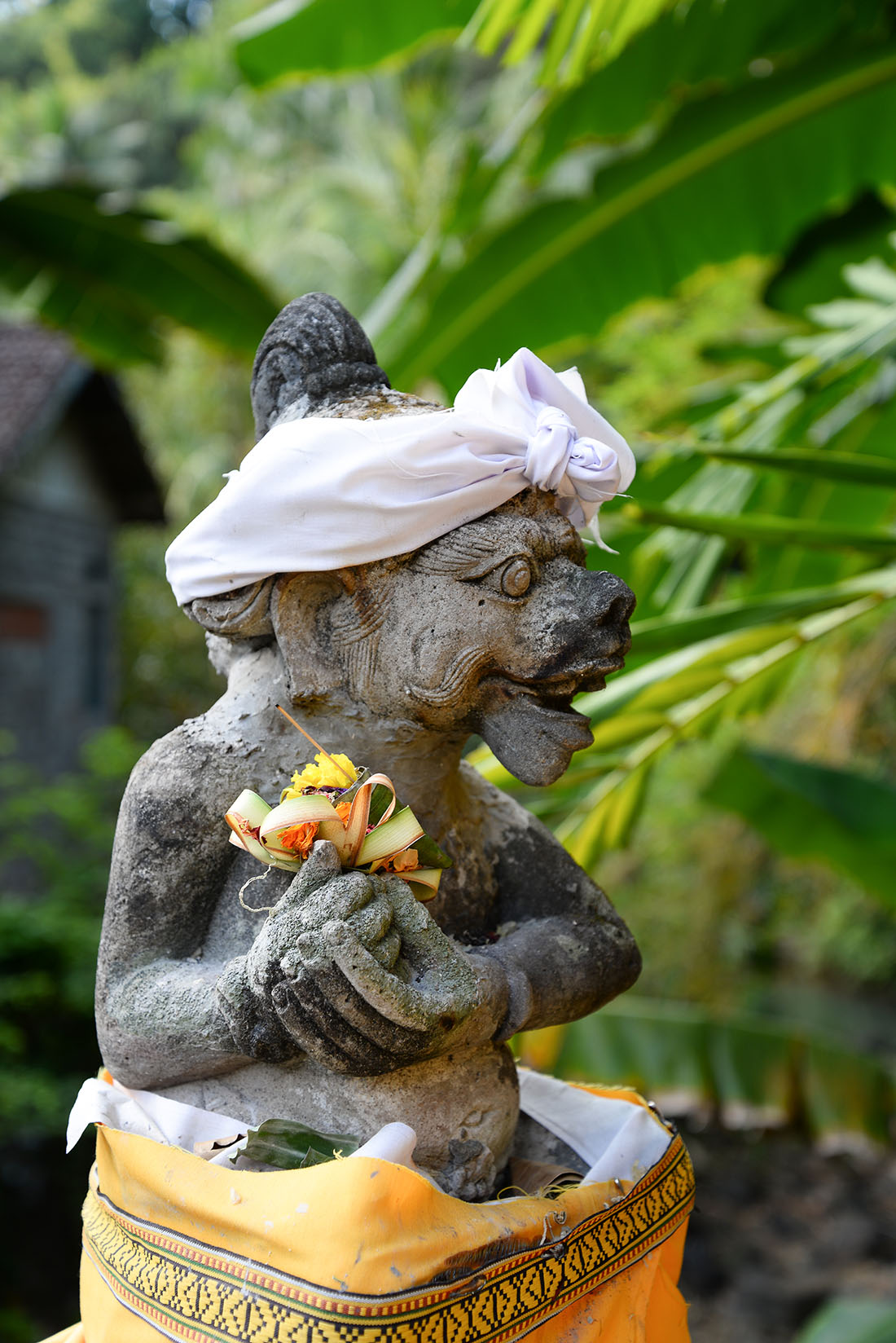
The Barong, a half-lion, half-dog creature with a flowing beard, is considered the lord of the forest, the king of spirits and the protector of Balinese villages. Villagers regularly honour the creature with dances and ceremonies. Our trip coincided with Galungan and Kuningan, and needless to say, we came across the Barong more than once during the festivities!
Children and adults dress up as this sacred mythological figure and parade through the streets and shops. All the locals rush up to greet the Barong and make an offering – it’s quite incredible and fun to watch!
Several venues stage the Barong Dance or Kris Dance, which tells the story of his battle against the witch Rangda, who controls evil spirits and decides to destroy the kingdom completely. Good and evil then fight it out for 45 minutes…
The show is very interesting and helps you understand the story behind this key element of Balinese culture. (We saw it in Sukawati.)

10 – Admire the Munduk waterfalls
In the north of Bali, the area around Munduk is very popular with French travellers – we met loads of them there. This part of the island remains fairly wild, green and unspoilt, but don’t expect it to be free of tourists!
There are several hikes in this area, through the village’s rice terraces or to the surrounding waterfalls. A path starting from the main street lets you “hop” from one to the next: Labuan Kebo, Melanting Waterfall, Laangan Waterfall. You don’t need a guide for this trek, as the path is simple and easy to follow. We did the 2–3 km walk with some French and German friends we’d met there, and have great memories of this other plunge into the Balinese jungle and the impressive waterfalls we saw.
Note: you have to pay 10,000 rupiah to access each waterfall. You can take a dip at the bottom… Too much of a wimp with the cold, I didn’t risk it!


11 – Wander into Bali’s most beautiful rice terraces
Literally, in my case, since I fell into one. (Would Chloé the klutz please come to reception, thank you!)
Bali means rice terraces… with colours and scenery that change with the harvests. So the most famous of them, the Tegallalang rice terraces, looked a little sad and not very green when we visited. I must admit the commercial side of the site, with its swing and its red dress rental stand at the entrance for the perfect Instagram shot, didn’t make me want to venture further in.
(You can still visit them in a more original way by e-bike…)
But back to the point. You’ll see plenty of rice terraces by the roadside, but obviously not all of them can be visited. If you’d like to walk their narrow paths, take a closer look at their irrigation system (subak) or watch Balinese farmers at work, head for the largest ones: Tegallalang, mentioned above, Keliki, Sidemen, Belimbing… or, like us, Munduk and Jatiluwih.

There’s an entrance fee (50,000 rupiah for 2 with our taxi, I think) for the latter, which are listed by UNESCO, but they were clearly my favourite during our stay in Bali.
Several paths loop around these lush, fertile terraces at the foot of Mount Batukaru. We followed the longest one, 6 km… estimated on the information boards at… 4 hours’ walk! Spot the mistake! (Balinese people really don’t like walking.) Visitors may not do the maths either, because we were completely alone on our path and could get really close to the farmers at work while discovering the ingenuity of this farming method at our own pace…


12 – Watch a traditional dance show (kecak, legong…)
In Bali, dance is a sacred tradition, an art that blends theatre, history and mythology!
In Ubud, traditional dance shows take place every evening in various buildings around town, the most famous at the Royal Palace. Plenty of street sellers will offer you tickets throughout the day. I’m not necessarily a big fan of this kind of performance, but we let ourselves be tempted.
There are several styles of dance, including:
- The legong dance, which tells a Sanskrit story from Hindu mythology.
- The kecak dance: performed by around fifty warriors around a torch fire, it’s just as unmissable! For a kecak show, it’s best to see it at Uluwatu temple.
The show is definitely worth the €6 you’ll spend on it. The dancers and musicians pour their heart and soul into it, as if possessed by the music. It’s hard to take your eyes off the stage! (We did find the tunes a little repetitive, haha! We felt like we heard the same ones everywhere in Bali – Aymeric had had enough, lol!)

13 – Chat with the locals
The Balinese are surely among the warmest and smiliest people we’ve ever met…
Welcoming, they love talking about their culture and way of life, as we found during our 2–3 weeks there with our perfect taxi driver, Wayan (contact details here)! We learnt so much from him (he even invited us to meet his family) and from other taxi drivers and the people we stayed with or ate with. Talk, talk – most locals speak very good English and are delighted to make new “friends”!
Travelling is also about meeting others and immersing yourself in their daily lives…

14 – Beware of the monkeys
I had a special relationship with Bali’s monkeys, which both fascinated and scared me throughout our stay. Balinese monkeys are so cute… from a distance! haha
I love watching them play, groom each other, eat (anything and everything, to be honest), swing from the branches…
Monkeys have lived alongside the islanders for hundreds of years and are sacred in Hindu culture. You’ll see them everywhere: by the roadside, in temples (especially Uluwatu), in the Ubud Monkey Forest…
But don’t be fooled by appearances. Behind their adorable looks, monkeys are very clever and have quite a temper. Kleptomaniacs at heart, they won’t hesitate to jump on you to grab your tissues, jewellery, biscuits, glasses… So keep an eye on your belongings! They generally won’t go for you if you don’t provoke them or tease them with food, as we saw plenty of (stupid, sorry) tourists doing!
That said, during our visit, a monkey was trying to turn on a tap, presumably for a drink, without success. A kind tourist came to help, but the water was actually turned off…! Bad luck! The furious monkey then took its revenge on the man’s legs! (Needless to say, I struggled not to laugh… The scene was hilarious… But I was even more wary of monkeys after that!)


15 – Relax in hot springs and baths
Bali also has several public pools and hot springs, which locals love to visit with their families at weekends. We tried what I imagine are the most famous ones, at Banjar, near Singaraja.
The very hot water, rich in sulphur and iron oxide, is said to be good for the skin and body… I loved this cheap moment of relaxation and would happily go back to soothe my poor neck as I lay out this article! There are changing rooms on site, but don’t expect luxury.^^


16 – Visit Ubud
We spent 6 nights in total in Ubud, Bali’s cultural centre, and even though we roamed the surrounding area on some days, we loved coming back every evening to our base, with its lanes strewn with offerings, away from the constant hum of scooters, its rice terraces (the Campuhan Ridge Walk), its monkey forest, its shops, its shows, its market (for tourists during the day, for locals or brave tourists before 7am), its dozens of tasty places to eat or warungs, its Ubud Palace…
With its village feel (the town is actually made up of 14 villages), Ubud has a timeless quality that really won us over!
We much preferred Ubud to Kuta or Sanur, for example!
Explore Ubud on a free tour (free guided tour in English)

17 – Don’t skip the south of the island
The accounts I’d read of southern Bali were mixed, as this part of the island seemed to be more for party-goers and surfers. I’d also gathered that the beaches were packed with tourists. We probably didn’t visit the same ones, because I found them very quiet in the middle of July! (Photos to prove it!)
We didn’t linger in Kuta, which did seem very busy, and headed off the day after we arrived to Uluwatu and the Bukit Peninsula.

Padang Padang
Personally, I really liked Jimbaran, Bingin and Thomas Beach. Padang Padang, the Instagram star, impressed me less.
The beaches in the south of the island, true surf spots, feel like a little paradise, and it would be a shame to skip them instead of making up your own mind rather than relying on hearsay.


18 – Take a cooking class
I love cooking, and I loved Balinese food just as much… I couldn’t leave Bali without taking a cooking class!
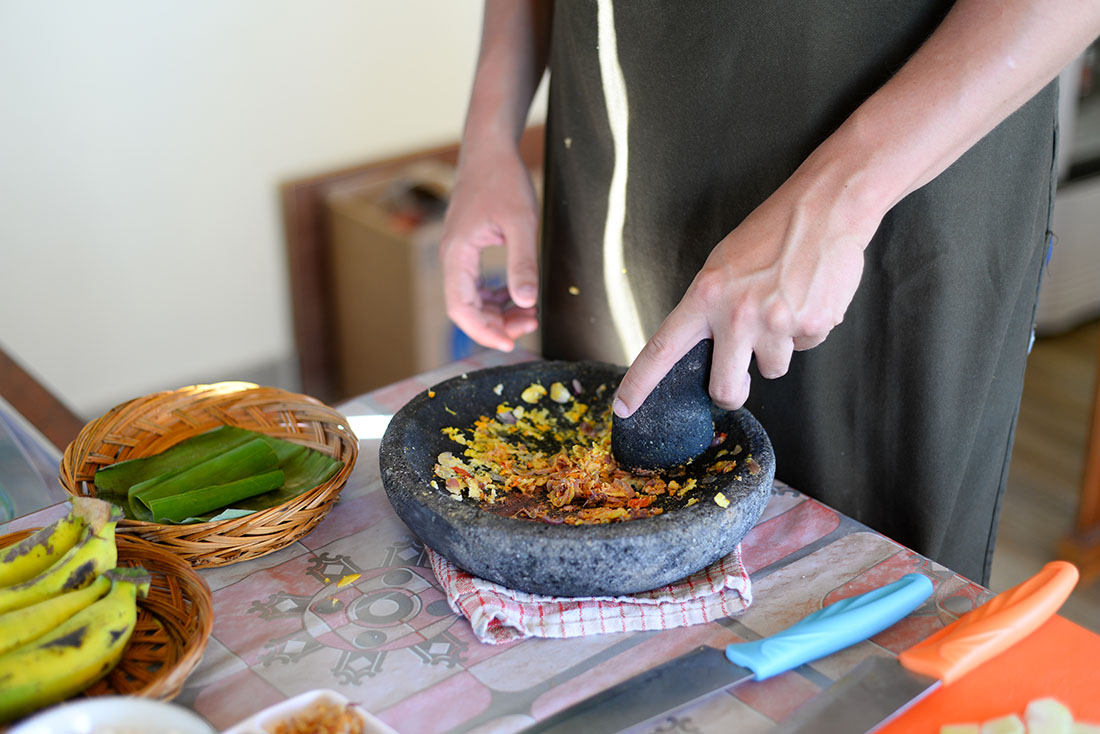
You can book one before your trip; we improvised in Munduk after falling in love with the warung where we’d just had lunch (Warung Made’s). Of course, we had to negotiate the price (500,000 rupiah for 2, for a 2-hour class). You can also book a full-day class here.

We were able to watch and try out a few recipes of our choice, and discover the incredible variety of spices that give them all their flavour. The class ends with a tasting of the dishes prepared… Delicious!
We left with a doggy bag and the recipes printed in English, which we’ve kept safe in case we get nostalgic for Balinese food…

19 – Head out to sea and spend a few days in the Nusa Penida archipelago
During our stay, we bought ferry tickets (which we had to haggle for, of course – do I even need to say it?) from Sanur to the Nusa Penida archipelago. It’s made up of 3 islands: Nusa Lembongan, Nusa Ceningan and Nusa Penida, and takes its name from the largest of them.
It only started developing around ten years ago! Electricity arrived late, and you’ll see that not all the roads are properly paved yet!
We chose to stay on Lembongan, which is smaller than Nusa Penida, so we could get around on foot without renting a scooter. A bridge connects it to Nusa Ceningan, and we spent 2 days exploring these 2 islands, fringed by incredible turquoise waters, with superb beaches and scenery. I have lots to tell you about them and will write a more detailed article in the coming weeks or months…
-> transfers and ferry to Nusa Penida


Nusa Ceningan
On the 3rd day, once I’d recovered from seasickness, we took the boat to Nusa Penida and hired a taxi driver to take us to the 4 main sights in the east of the island (Angel’s Billabong, Broken Beach, Kelingking Secret Point, Crystal Bay). (I’ve included his number in the itinerary section of my little guide to Bali).
I honestly think Nusa Penida deserves 2 or 3 days to explore it more thoroughly and glimpse its still-wild corners, its “Bali 20 years ago” feel… (For more details, see this article by Asianwanderlust on the subject (in French))
-> Nusa Penida tour with snorkelling
We’d have needed to rent a scooter, though, which we preferred to avoid as I already had my forearm in a splint.^^ (You make do with what you’ve got!)
The archipelago was the last stop and one of the highlights of our trip. I particularly loved this little slice of paradise.

Broken Beach, Nusa Penida
20 – Purify yourself at Tirta Empul
The sacred springs of the “Temple of Holy Water” are said to have healing and purifying powers!
The Hindu temple is said to have been built in 926 and, like all temples in Bali, is divided into 3 sections: the outer courtyard, the sacred inner section (where Balinese people come to pray), and the central section, with several natural stone pools fed by a sacred spring. The main pool flows into another through 13 fountains.
This is where the purification ritual, or Melukat, takes place. It’s important to the Balinese, and tourists can take part too. Fully clothed, worshippers make their offerings and then, praying, dip their heads under the first 11 spouts in turn. The last 2 are reserved for people who have had a death in the family. It’s an important ceremony for the Balinese: the holy water is believed to wash away impure thoughts and drive out inner demons.
This ritual teaches you a lot about Balinese spiritual practices!
Feel free to follow it all the way through – let me know if you feel better afterwards!^^

And also:
- Visit Bali’s water palaces, Tirta Gangga (very popular), or my favourite, much more peaceful, Taman Ujung, near the village of Seraya.
- Visit one of the Kopi Luwak coffee plantations, renowned as the best coffee in the world. As this production involves intensive exploitation of the animals (the luwaks), we chose not to stop.
- We also made the most of our stop in Lovina to go and see the dolphins, but I came away very doubtful about the experience. That’s why I haven’t included it in this list of things to do in Bali. We set off from our hotel, 6 of us on a small boat. Alone on the water, in the calm, we moved forward very slowly… The sun began to colour the sky, and we spotted a few dolphins in the distance. A unique moment… which should have stopped there. We then joined other boats, all gathered in the same spot to chase the dolphins, speeding towards them as soon as one was spotted. The outing became uncomfortable and disrespectful, and all I wanted was to go back… In short, I wouldn’t recommend it, and wouldn’t do it that way again. I’ve since read that Edi’s Lovina Dolphin Tour (+62 852 3747 7172) is much better and more respectful… But as I haven’t had any feedback on it, I can’t say for sure.

Taman Ujung
I hope these tips and ideas for things to do and see in Bali will be useful…
If you enjoyed the article, feel free to pin it on Pinterest. 🙂