
[This article about my language stay in Malta follows a collaboration with MaltaLingua. Many thanks to them – the invitation has in no way affected my editorial freedom. Unpaid commercial collaboration.]
I was lucky enough to be invited on a language stay in Malta, and I immediately thought it was a brilliant idea. As someone who travels a lot and dreamt of feeling more at ease in English on my trips, this experience came at just the right time.
Malta, with its golden light, honey-coloured façades and renowned schools, was the perfect setting to learn English through immersion, between the sea and sunny streets.
Beyond the language side, this stay was also a more personal challenge: travelling alone for the first time, changing roles, becoming a student again, taking the time to listen, learn and progress at my own pace. A different kind of interlude, almost suspended in time, mixing discovery, introspection and renewal.
I finally put down my suitcase at MaltaLingua English School for a week of immersion…
In this article, I share my full review and experience: how the lessons are organised, levels, accommodation, atmosphere, ideal length, the people I met… everything I’d have liked to read before I left.
If you’re also considering a language stay in Malta, whether to improve your speaking, gain fluency, prepare a new project or simply enjoy a rewarding personal adventure, I hope this article will help you… and maybe inspire you.
A language stay in Malta: who is it for?
If there’s one thing I understood when I arrived at MaltaLingua English School, it’s that this kind of stay doesn’t have just one type of student.
The school’s organisation, its level-based system, the variety of lessons and activities… everything seemed designed to make room for everyone, whatever their age, background or goal.
I came across an incredible mosaic of backgrounds, ages, projects and motivations… And that’s probably what makes the experience so rewarding.
First there were young people fresh out of school, treating themselves to a long course in Malta before starting university – a way to firmly strengthen their English before spreading their wings.
At the other end of the spectrum, I met older people, sometimes retired, who were finally treating themselves to this little luxury: lessons in an inspiring setting, to travel more confidently, communicate more easily and learn new skills… because you’re never too old to learn or to treat yourself.
I also met people my age, often there for professional reasons: improving their English to progress in their career, aim for other jobs or meet the language requirements of their sector. Some were funding their stay through France’s personal training account (CPF), while others had a course paid for by their employer.
Others again were there for personal reasons, entirely at their own expense, simply because they wanted to – for the satisfaction of progressing, pushing themselves and giving their English a boost.
And then, interestingly, I saw families: parents on holiday with their children, each taking lessons in the morning before enjoying the island together in the afternoon. A lovely way to combine business with pleasure. And their presence is no coincidence: the school has been developing real expertise in welcoming young learners for several years. In 2023, MaltaLingua was a double finalist at the StudyTravel Star Awards in the category English Language School Europe and was also shortlisted in the category Junior Course for under-18s.
In reality, this kind of stay is for everyone, or at least everyone who wants or needs to improve their English.
The length, timing and type of course depend on your goals, your family situation, the time you have and, of course, your budget, depending on whether your employer pays for the course or not.
Whether you need to regain confidence, gain fluency, reach a professional goal or treat yourself to a break to progress… there’s something for everyone.
For my part, my main goal was to gain confidence: to feel more at ease when travelling, in unexpected encounters, everyday small talk, or those situations where something goes wrong and you need to be able to explain, ask and negotiate a little.
In short, to be able to cope without the language barrier adding stress to the unexpected.
View this post on Instagram
Why Malta in particular?
If I chose Malta for my language course, it was above all for its unique setting.
It’s hard to dream of better: the seaside, sun-drenched landscapes, a mild climate all year round… Enough to learn English in particularly motivating conditions!
English is also one of the two official languages, along with Maltese. You hear it everywhere: in cafés, shops, buses, everyday conversations. Natural immersion, well beyond the classroom.
Another significant advantage: the cost of living.
Language stays in Malta are often more affordable than in England or Ireland, for accommodation as well as for meals and activities. So you get an excellent standard of teaching… without breaking the bank.
And for European travellers, everything is simple: Malta is part of the European Union, so there’s no paperwork to worry about.
Small in size but huge in what it offers, Malta packs in everything we love about travelling: golden beaches, fascinating history, Mediterranean food, a rich culture and a warm atmosphere. In just a few square kilometres, the island promises a complete adventure.
Finally, the MaltaLingua school itself played a big part in my falling for the place: it’s accredited and offers high-quality teaching in an ideal setting, a stone’s throw from the sea, cafés and restaurants. A perfect place to combine learning with the good life. In 2024, MaltaLingua English Language School was voted best English school in Malta for 2024 by its students… and a little research confirms that the atmosphere is said to be excellent and that students generally leave delighted with their experience!
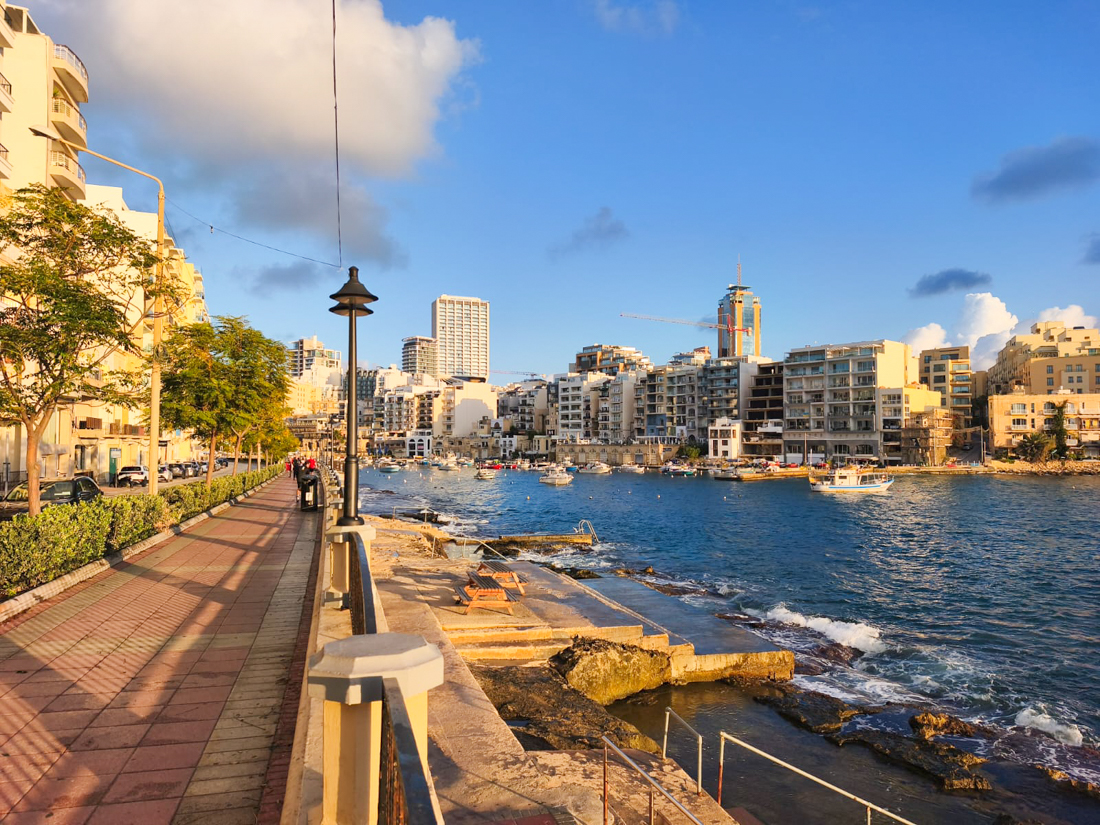
Sliema early in the morning… On my way to school on the first day… ♡ (If only I had the same view on my way to work, haha!)
Staying in Malta on a language course with MaltaLingua
MaltaLingua offers several accommodation options, so everyone can find a setting that suits their budget, personality or level of independence. You can stay with a teacher for total immersion, with a host family for a more homely environment, in a flat provided by the school, or even choose one of the hotels recommended by the school if you prefer more comfort and privacy.
I chose a shared flat: practical, friendly and great for meeting new people. It’s also a good way to speak English outside lessons, especially when your flatmates come from all over the world.
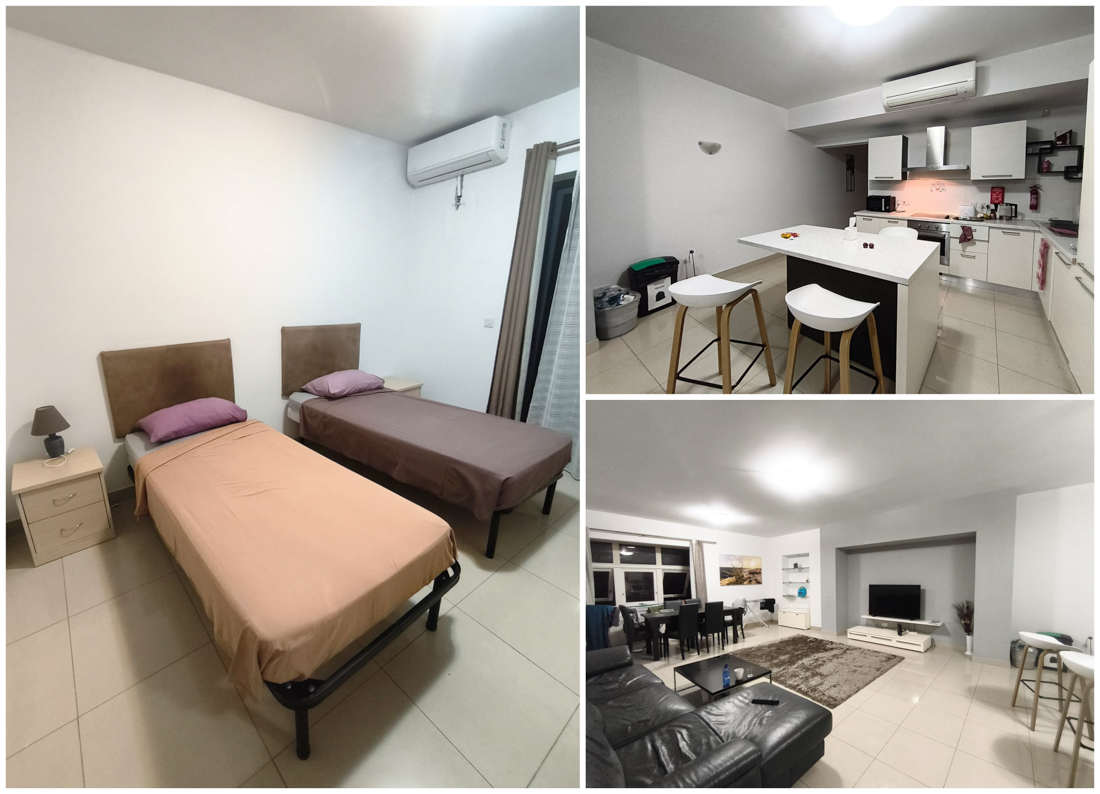
In these flats, you can book a single or shared room (usually for two). Either way, everyone has their own personal space, while the kitchen and bathroom are shared. A cleaner comes after each departure and during the week, which keeps things clean without any hassle over organisation… or with your roommates^^!
I really appreciated the location of my accommodation: a quiet residence about ten minutes’ walk from the school, 50 metres from a small grocery shop (very handy) and two minutes from the seafront and bus stops. Most of the flats are between 5 and 20 minutes’ walk from MaltaLingua, which makes getting around very easy.
The seafront, just steps away ♡
The flat was well equipped: a big kitchen, a nice TV, everything you need to feel at home quickly. I had three flatmates, two men and a woman, all German. We bumped into each other now and then, but our schedules didn’t really match, so I didn’t end up seeing much of them.
As for the kitchen… let’s say it was mostly decoration. With the cost of living being very reasonable in Malta, I quickly adopted the “eat out” or “takeaway pizza slice” approach – much simpler and more pleasant after a day of lessons.
Prices vary depending on the season and the option, but you can get by from €200 a week (detailed prices are on the school’s website).
How the courses work
This is where things get serious… well, almost! I’ll try to be brief while answering the questions you asked me on social media and the ones I quietly asked myself before leaving.
Course options: to each their own pace
Several options are available, depending on your motivation, your schedule or how bold and immersive you want to be:
- Standard English: 20 lessons of 45 minutes a week (15 hours). About 3h15–3h30 of lessons a day → €234/week.
• Intensive English: 30 lessons of 45 minutes (22h30). About 4h30 a day → €343/week.
Prices (available here) go down the more weeks you book, a bit as if the school were rewarding your loyalty (or your bravery).
There are also more specialised options (Business Standard, Business Intensive) for those who dream of confidently chairing international meetings, as well as private lessons for the most motivated (or the shyest).

My phone was stolen when I got back to France, but I still wanted to show you a glimpse of my week of lessons… A little montage of my daily Instagram stories…
️ The rhythm of the days: a week of ups and downs
Lessons start every Monday and run from Monday to Friday. Depending on your option, you’ll have 3 to 4.5 hours of lessons a day, organised in half-days that alternate: morning, afternoon, morning… a gentle weekly choreography.
With the Standard option, you get a half-day free as a bird, a luxury I fully enjoyed. It’s up to you how to spend it:
• splashing about in the school’s turquoise pool,
• sipping a coffee on the rooftop watching the sea sparkle,
• going for a heroic jog along the seafront,
• or heading off to explore the island, bag on your shoulder and hair blowing in the wind.
If you prefer organised outings, the school offers daily excursions. But the independent (sometimes slightly antisocial) traveller that I am prefers to follow her own rhythm and deliberately get lost in the streets. So I bought a weekly bus pass at reception: the perfect ticket to explore the towns and corners of Malta that had caught my eye.
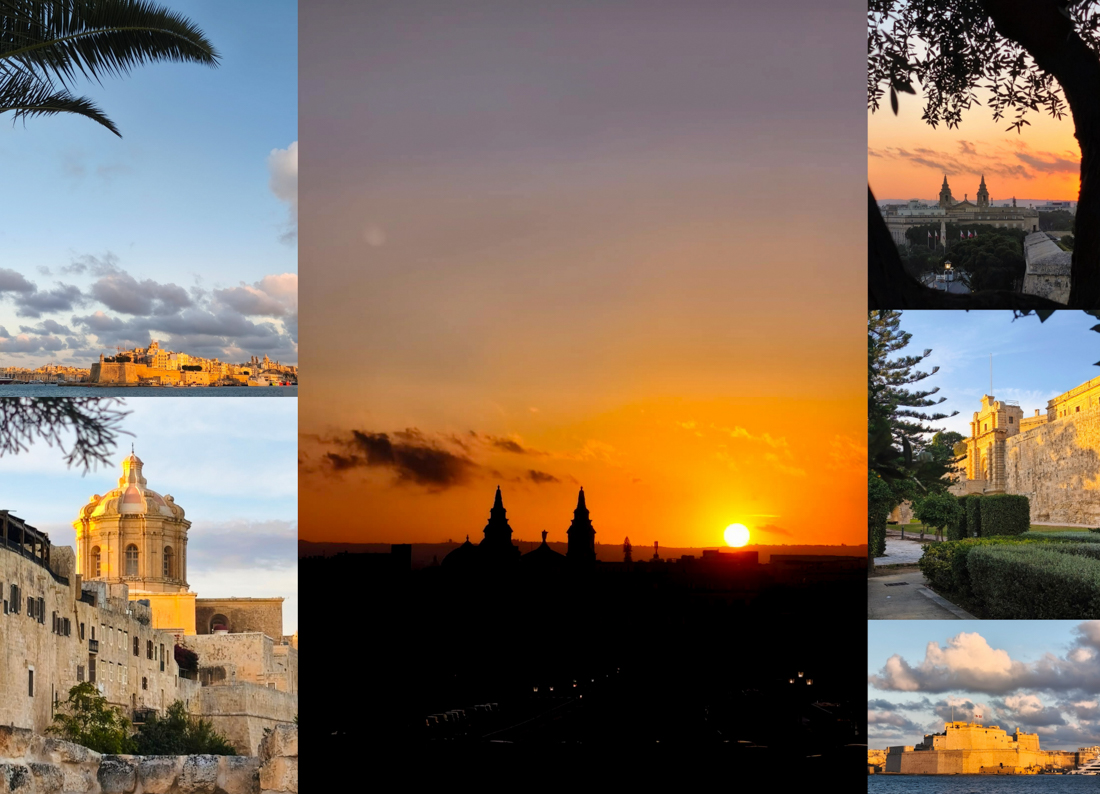
Evenings in Malta, here in Valletta and Mdina ♡
The little extras that punctuate the week
To liven up school life, a few events punctuate the stay – real pluses in my view:
- The welcome ceremony (Welcome Party): an apero-dinner to break the ice (or to taste every nibble on offer, if you prioritise your appetite over your social strategy).
• The graduation ceremony on the last day: a simple but symbolic little celebration
• The clubs: grammar, pronunciation… They’re actually free mini-lessons, open to all on registration. A great way to go deeper into a specific point and meet students outside your own group.
I signed up enthusiastically, determined to make the most of my stay. I particularly liked the pronunciation club, which tackled my absolute weak spot head-on (the words I usually pronounce in a… let’s say artistic way!)

How lessons are organised at MaltaLingua
Lessons take place in small classrooms with tables in a U shape to encourage interaction. And there’s plenty of it!
The activities get us working on different skills: listening, comprehension, grammar… through games, debates and exchanges of ideas between students. The topics, close to our everyday lives (meeting people, food, travel…), are an excuse to communicate again and again, in every form: telling a memory, sharing a piece of yourself, giving your opinion, justifying a grammar answer…
Here, you communicate non-stop, and you’re active almost all the time, carried along by a lively, collective energy.
I was a little apprehensive about joining an unfamiliar class, being rather reserved and not very comfortable speaking English. Yet the school encourages participation without ever forcing it: we mostly worked in pairs or threes, and these pairs or trios changed after every break. Impossible to stay in your shell.
You gradually open up to each classmate, help each other and pick up the words and phrases the others know better. You learn together, in a stimulating dynamic, almost contagious.
Shy with new groups, I was dreading finding my place among strangers… most of them not French speakers! And in the end, I loved my class: diverse, warm and kind.
This little temporary world welcomed me without judgement, gently, and I came home with a slightly fuller heart, enriched by encounters that hadn’t existed the week before.
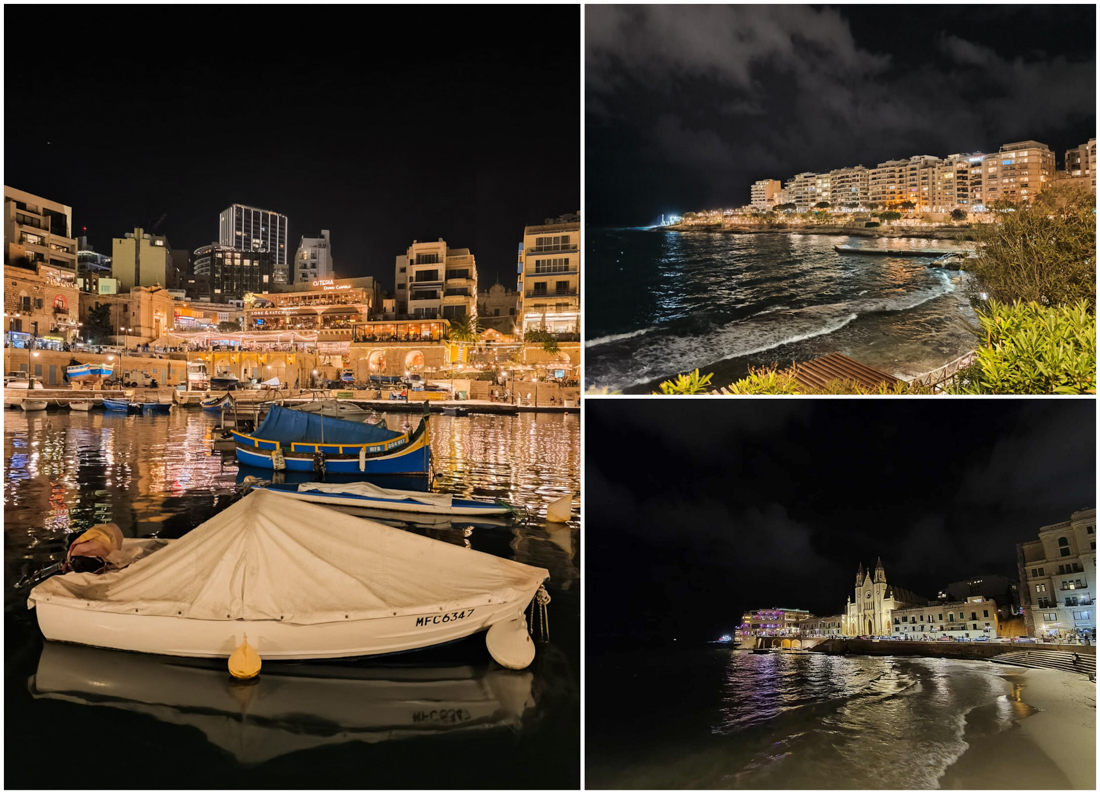
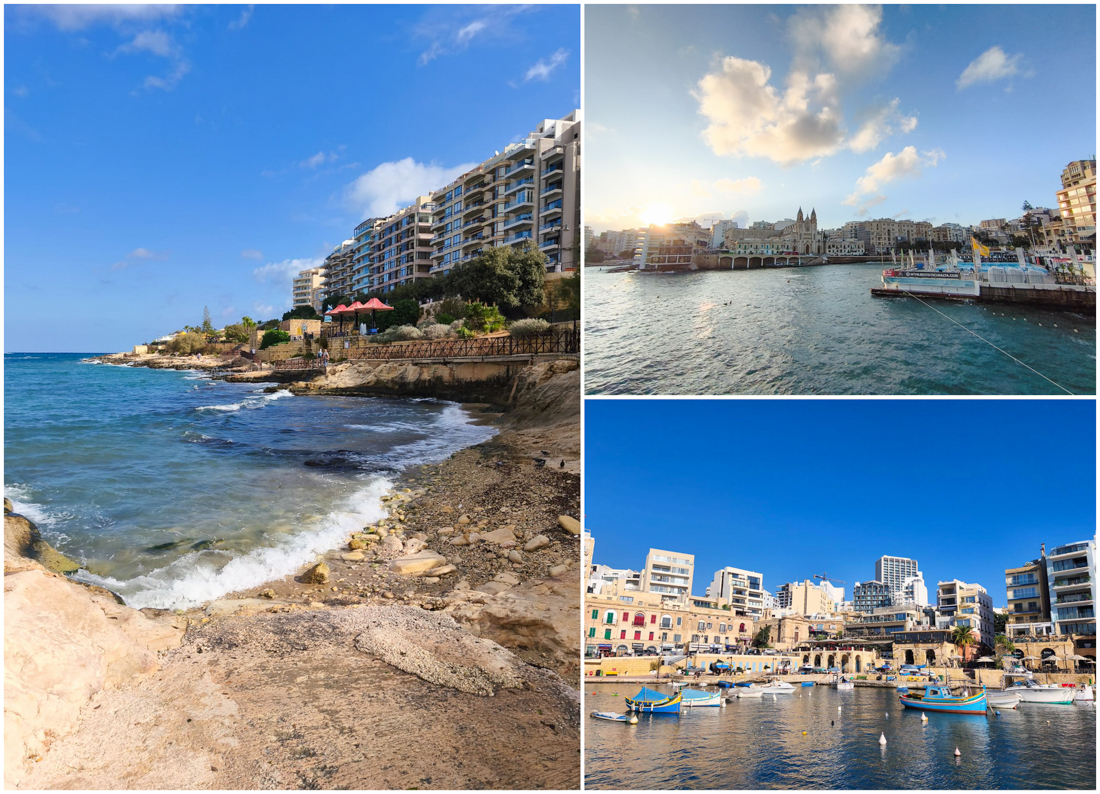
Sliema by night
How the groups are formed
The aim is to make groups as homogeneous as possible, so that no students feel lost or, on the contrary, bored stiff. Classes are therefore decided based on a placement test.
The first part is done online, as a multiple-choice quiz. I received mine a few weeks before leaving: about twenty minutes is enough to complete it… as long as you really concentrate. So avoid doing it between two batches of crêpes, unless you like living dangerously and answering grammar questions with a spatula in your hand.
The second part of the “test” is a short piece of writing. Nothing scary: a few lines are enough to gauge your level, point you towards your future class and reassure everyone that you’re not expected to write like Shakespeare on day one.
Three levels are offered at MaltaLingua English School:
• Elementary: A1–A2
• Intermediate: B1–B1+
• Advanced: B2–C1
When you arrive at the school on the first day, a short oral test completes the process. Nothing intimidating: three or four minutes of conversation with a teacher, to talk about your daily life and your motivations, and prove you can say more than “Hello”. A gentle start, almost as if the school were welcoming you with a smile.
I joined the B1+ group. I was a bit worried the level would be too ambitious for me, but it’s very easy to change class if needed: drop down to catch your breath, or move up a notch if you feel your language wings growing.
In the end, the question never came up: I felt right at home in that group, carried along by my classmates and a pace that suited us all.
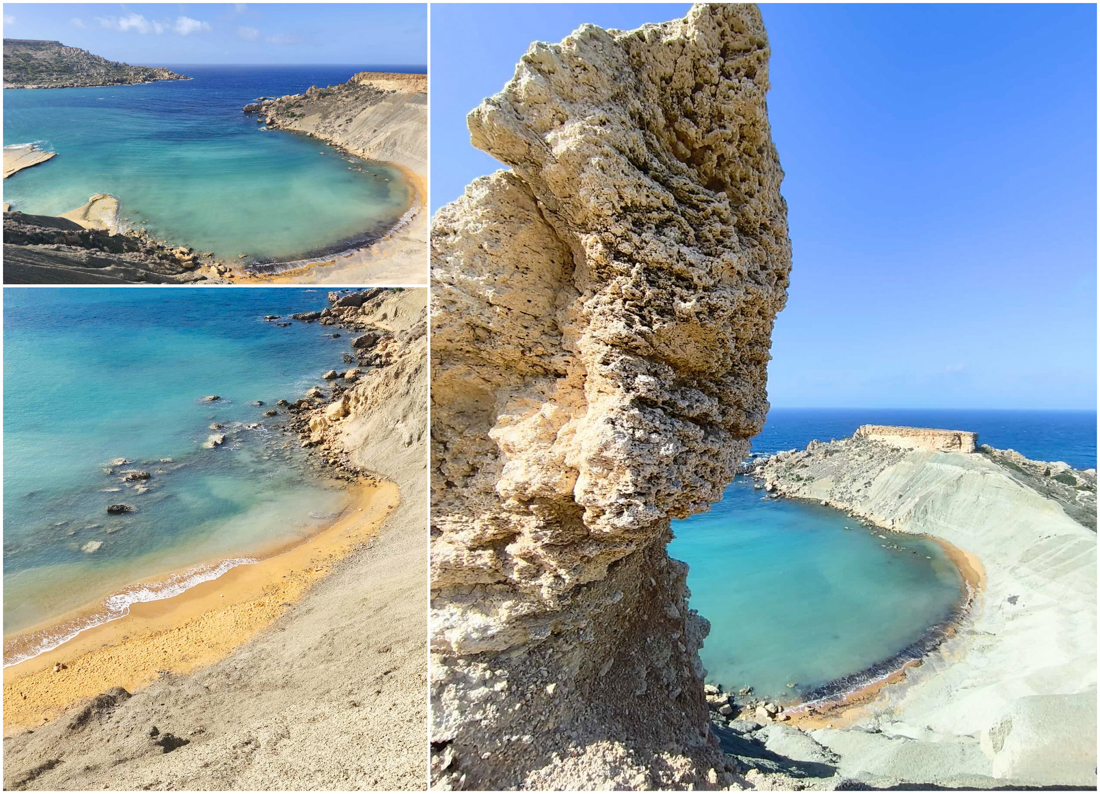
Qarraba Bay ♡
Becoming a student again, an unexpected interlude
If I had to sum up this week, I’d say it was as eye-opening intellectually as it was humanly. What struck me most was probably the pleasure of being a student again.
A slightly strange, almost overwhelming feeling for a primary school teacher: going back to the other side of the desk, being once more the one who learns, listens and sometimes doubts…
In class, I felt something I’d almost forgotten: the simple joy of Learning, feeding my curiosity, quenching this thirst for knowledge that never really leaves me.
And then there was the progress. Huge, unexpected, almost lightning-fast.
In just seven days, I felt as if I’d oiled all the rusty cogs of my English.
Admittedly – and that was the whole point – I had to speak English all the time: in class, in the pronunciation and grammar clubs, on the rooftop with my classmates, in cafés, buses, streets, with my flatmates and my fellow adventurers… many of them non-French speakers.
This constant immersion forced me to take the plunge, to look for words rather than avoid them, to dare without putting myself down.
Little by little, my accent relaxed, I hesitated less, and my vocabulary grew naturally through conversations.
In class, we worked on real situations and everyday dialogues: ordering, talking about our lives, defending an opinion, telling an anecdote, talking to a doctor… All skills I immediately put into practice outside school, almost without realising it. This constant back-and-forth between theory and reality was incredibly effective.
I felt my English open up, breathe and regain some strength, like a muscle you hadn’t been using enough that finally gets its power back.
In the end, this week didn’t just improve my English; it rekindled my love of learning and reminded me of what my own pupils must sometimes feel:
the pride of having made progress, and the desire to keep going.
And despite this great progress, I quickly realised that a week was really short. By the time my inner engine – more diesel than rocket – got going, I really opened up and my confidence settled in, it was almost time to leave.
I started to feel completely at ease… the day before I left.^^’
Another week really wouldn’t have hurt to consolidate this progress and enjoy a little more of this momentum that was just starting to take off.
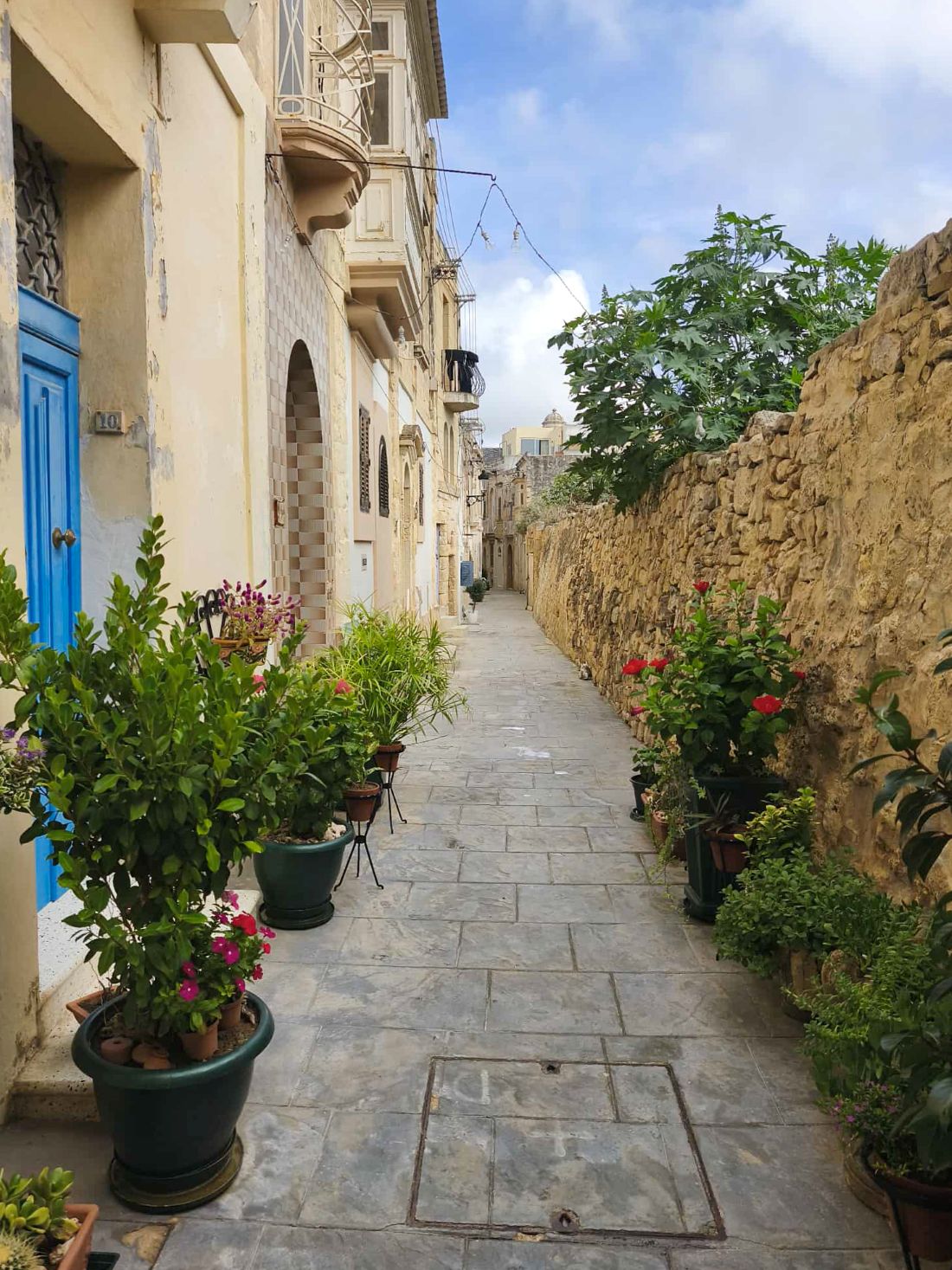
In the streets of Mdina
How long should you plan for an English course?
I did one week of lessons, and even though I got a lot out of it, I quickly thought that a second week really wouldn’t have hurt. It would have let me consolidate my progress, enjoy a bit more of the ease that was just starting to settle in, and anchor the reflexes further.
On site, I met people with very different profiles:
• some stayed two weeks,
• others a month,
• others two or three months,
• and even a few brave souls who had treated themselves to six months of immersion.
Which made me realise that there’s no ideal length, only the one that meets your goals.
For some, a few days are enough to regain confidence; for others, it takes several weeks to reach a required level for work; others simply aim to gain fluency, naturalness and spontaneity.
We learn all our lives and, with languages, there’s always plenty of room for improvement, whatever our current level.
In the end, the right length is the one that helps you move towards what you really want, whether that’s a small breakthrough or a big leap.
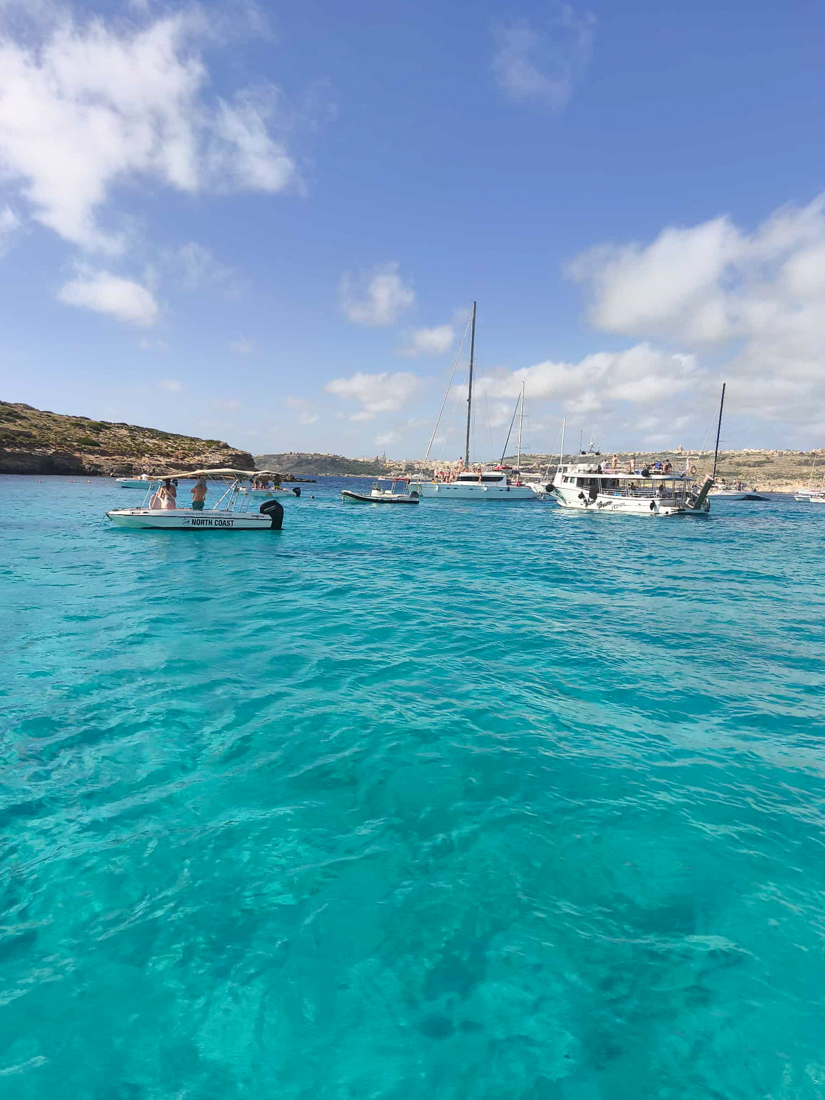
Blue Lagoon, Comino ♡
Beyond language skills, a personal challenge
I admit I didn’t arrive in Malta feeling very calm. This week of English lessons was a challenge for me on many levels… one of those challenges that make your heart beat a little faster, somewhere between excitement and vertigo.
First of all, it was my very first solo trip. I’d never travelled alone, and even though I’m often the main organiser of our getaways, the idea of travelling with no one by my side unsettled me. I dreaded the lack of company, the silence once my bedroom door closed, the absence of a friend or loved one to comment on a view, share a fit of giggles or just exchange a knowing look.
Being rather shy, I was really apprehensive about finding my place in a class of strangers. But MaltaLingua strives to encourage interaction and shared experiences. Very quickly, the interactive lessons, the school’s little rituals and especially the Welcome Party made all the difference. Conversations happened naturally, almost without me noticing. Within a few days, I found myself with new reference points… and new acquaintances, lovely encounters that stayed with me.
I didn’t form strong bonds with my flatmates – our schedules never matched, and we were just silhouettes passing between doors. But it could have been another way of meeting people and making friends.
This time, it was mainly my classmates and the students I met here and there who filled my little notebook of Maltese memories.

Marsaxlokk ♡
And then, as the days went by, I discovered something I hadn’t really suspected:
solo travel has its own special sweetness.
Not that it replaces my trips with friends, as a couple or as a family (which I still love just as much!), but it offers a different kind of freedom, precious in another way.
I loved going at my own pace, wandering as I pleased, eating wherever a smell or a terrace beckoned, changing plans on a whim, improvising a detour here or there, letting myself be carried by my thoughts or by the salty breeze… In my life as a mum, a teacher and an often much-in-demand woman, moments when I only answer to myself and follow my impulses… are rare. In Malta, I enjoyed being alone… and surprisingly well. Curious about everything, attentive to details, free to listen to myself a little more and savour every little moment, and even more open to others than usual. I also loved meeting people on my own, without preconceptions, without the image you project when travelling as a couple or in a group. I loved introducing myself simply as me, Chloé, with no other role than the one I’d chosen. And I loved being liked like that, for who I am, naturally. A gentle kind of solitude that did me good.
A simple but rich interlude, which did me good and reminded me that you can discover yourself differently when you travel at your own pace.

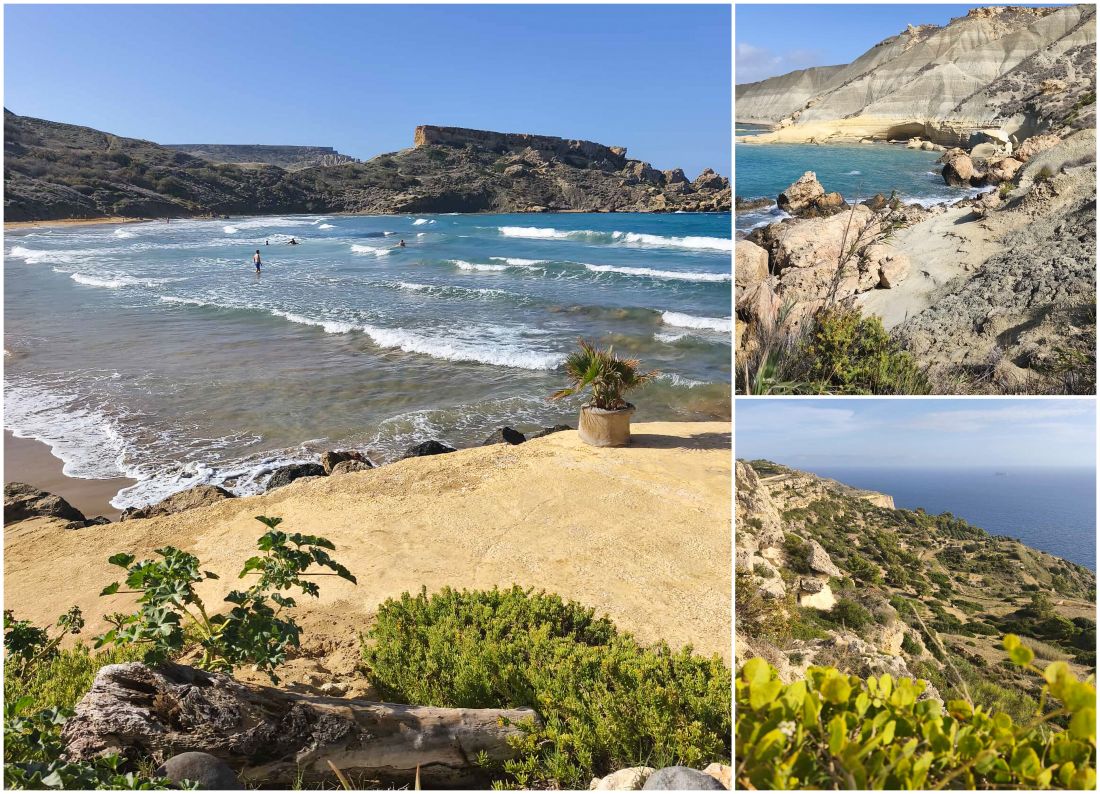
Rock formations around Delimara and St Peter’s Pool, Malta
To wrap up this long article, and as I wrote on Instagram: I came to improve my English. I’m leaving with words, faces and a thousand shades of blue.
This week gave me much more than a few new grammar structures: a lovely boost of confidence, moments I’d never have experienced otherwise, and proof that I can travel alone… without getting lost too often.
And between lessons, Malta took care of the rest: its honey-coloured streets, its temperamental buses, its coves that make you want to skip a lesson on purpose, its heart-touching sunsets… The island is full of things to do and see, so much so that the days always seemed too short.
As it deserves more time, I’ll dedicate a second article to it, full of my walks and favourite spots…
A week of English, yes.
But above all a week to dare, to smile, to discover myself differently… and I didn’t see that coming.
I came back with a SMILE♡
A big thank you to everyone for this week: the friends I met there, the teachers, the organisers of the stay, and the friends who sent me some of the photos shared on site so I could publish this article^^…