
What is there to see in northern Sicily to round off a road trip? For our last few days, we travelled from Catania to Messina, Cefalù and finally Palermo – four very different stops that reveal another side of the island.
These are the final stops of our Sicily road trip. All that’s left is to make our way back to Palermo, the island’s ‘capital’, where we’ll catch our flight home. The end of the trip is drawing near, and it looks set to be a little tricky: our hike up Mount Etna clearly didn’t agree with my neck. My upper body is half seized up, so we’ll have to take things easy for the last four days.
Northern Sicily: the key facts
| Stops | Catania, Messina, Cefalù and Palermo |
| Duration | 4 days in our itinerary |
| My favourite | Cefalù, for its old town, its beach and the Rocca |
Planning a trip to Sicily?
Find my full itinerary and tips here.

Catania
Things to do in Catania: the main sights
In the shadow of Mount Etna, Catania doesn’t quite win us over. Alleys and little squares tangle around the breathtaking Piazza del Duomo, the beating heart of the city, which can’t fail to leave you open-mouthed. The cathedral façade, the Fontana dell’Elefante and the Palazzo del Senato are true masterpieces.

Even so, the magic doesn’t happen for us. Dazzling, lost in a cacophony of shouting and car horns, Catania is too full-on for me. Too chaotic, perhaps.
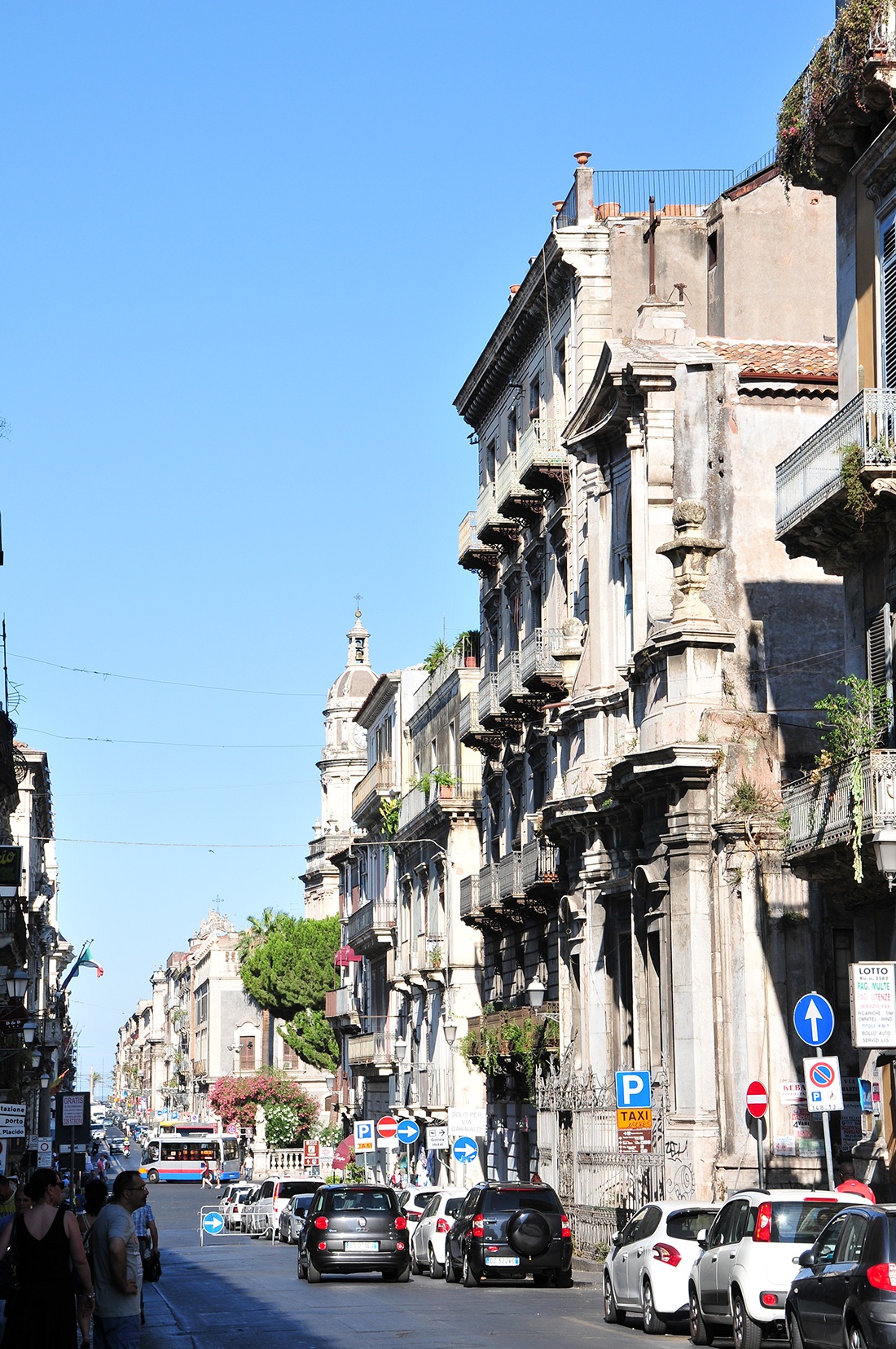
We wander aimlessly along its wide streets lined with dark façades, spotting elegant palazzi and incredible Baroque frontages along the way, many of them crumbling. Catania leaves us with a sense of unfinished grandeur, of past splendour that we struggle to grasp… Perhaps it’s our own fault – maybe we should have given it a whole morning rather than the end of an afternoon… Catania was one of those missed connections.

What to see and do in Catania:
- Piazza del Duomo, a UNESCO World Heritage Site, with its cathedral, the Fontana dell’Elefante and the Chiesa di San Francesco
- the Museo Belliniano (birthplace of the composer Vincenzo Bellini)
- the Civic Museum, housed in Castello Ursino
- Piazza Mazzini, surrounded by 32 Roman columns
- the Roman theatre
- Catania’s markets, especially La Fiera and La Pescheria, the fish market (a shame we visited Catania in the afternoon…)
- Centro Culturale Le Ciminiere, a former factory that is home to the Historical Museum of the Allied Landings and the Cinema Museum
- what to drink in Catania: a seltz (sparkling water mixed with lemon juice and fruit syrup)


Things to do in Messina: the highlights of the centre
Messina, 95 km to the north, attracts fewer eyes and visitors, but it’s well worth savouring on a short stroll around the centre. Set on the north-eastern tip of the island, this maritime crossroads has always been steeped in myths and legends. (The city is said to have been founded by the god Saturn, and swimming here is supposedly tricky because of the opposing currents stirred up by Charybdis and Scylla…)
-> guided tour of the city for €25


After a quick lunch at Pasta & Co, which we recommend, we wander at a leisurely pace through the shady maze of streets leading to Piazza del Duomo. Next to the cathedral of the same name, clad in polychrome marble, the 60-metre bell tower houses an astronomical clock built in Strasbourg in 1933, said to be the largest and most complex in the world! (You can climb to the top for a closer look.)


Another notable monument in Messina is the Chiesa della Santissima Annunziata dei Catalani, one of the last witnesses to the great Norman era, which has kept its original architecture – I found it stunning.

What to see in Messina:
- Piazza del Duomo and its bell tower
- the Chiesa dell’Annunziata dei Catalani
- from Messina, take a day trip to Stromboli and Panarea or follow in the footsteps of The Godfather


Things to do in Cefalù: old town, beach and the Rocca
We had planned to spend a day hiking in the Madonie National Park, but as I wasn’t quite up to it, we decided to stay in Cefalù itself and spend a gentle day exploring it. I have to admit I didn’t expect to like this very popular seaside resort all that much, visiting it in the middle of July. You should never let preconceptions get in the way…

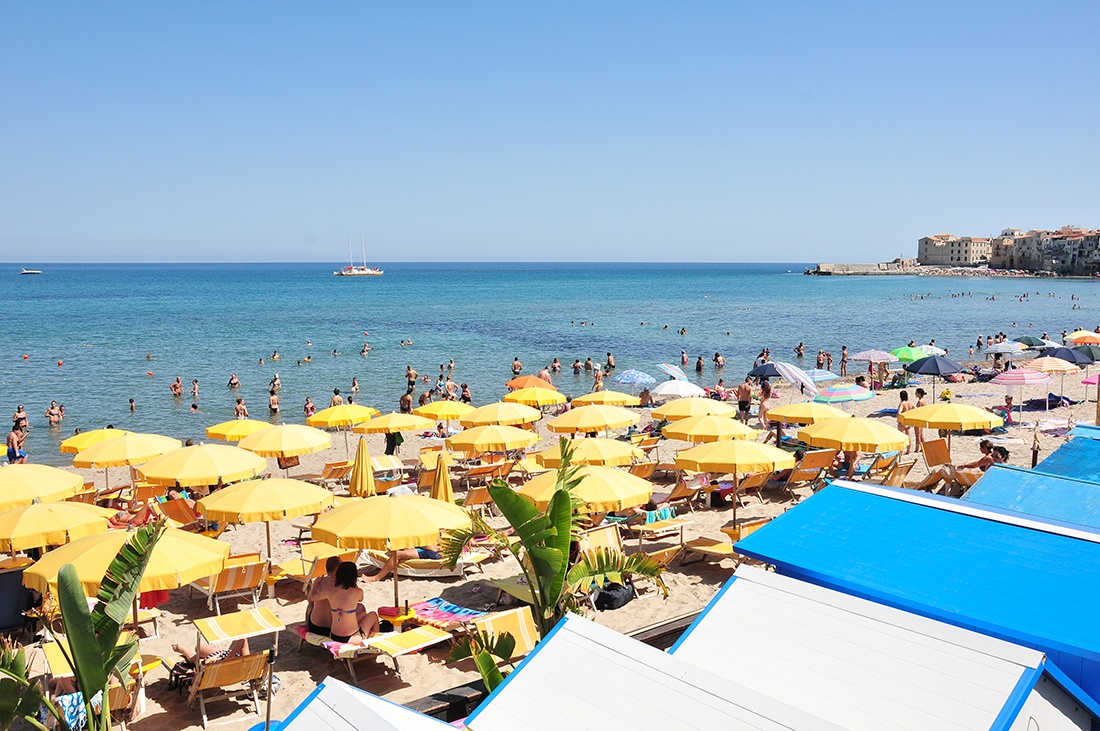
Cefalù turned out to be a lovely surprise… and its beautiful sandy beach an oasis of coolness that we welcomed with genuine delight.
In Cefalù we slowed down, taking the time to wander through picturesque, timeless medieval lanes (I’m obviously not talking about Corso Ruggero, the main street lined with souvenir shops)… Here, washing hangs from the windows, the blaring sound of a television drifts through a half-open door and echoes on the cobbles, mingling with the voices of a group of donne (women) discussing the latest news. Despite being a beach resort, Cefalù has kept an unusual, authentic charm… set against the backdrop of waves lapping the rocks, the deep blue sea and a castle perched on its rocky spur.


That castle is where we now head, after passing through Piazza del Duomo, overlooked by a Norman-Romanesque cathedral that is all majesty and simplicity.
A fairly strenuous walk takes you up to the top of the Rocca, 270 metres high, with a pretty incredible view over the town’s rooftops, the marina and the surrounding coves. Up there, you can also wander among the stones of an ancient megalithic site that has withstood the ravages of time…
In summer, bring a large bottle of water: in the afternoon, when the sun is at its highest, there’s barely any shade on the path – and wear proper shoes! We didn’t expect to find ourselves on such a steep, rocky trail that day and hadn’t thought to bring our hiking boots, much to our regret…

Not to be missed in Cefalù:
- the Chiesa del Purgatorio and the Chiesa dell’Itria
- the cathedral and its cloister
- the beach
- the old wash house (Lavatoio medievale)
- the Rocca
- the Museo Mandralisca
We stayed at Villa Magara – I recommend it! The view over Cefalù from up there is incredible!


Things to do in Palermo: our discoveries and impressions
Palermo, Palermo… Palermo. What can I say about Palermo, a city I never quite managed to get to grips with during our last two days in Sicily?
Right from the start, I’m struck by the contrasts that run through Sicily’s main city. Unpredictable and chaotic, it struggles to put me at ease – and the pain that has been wearing me out for two days doesn’t help me see it in a calmer light. Founded by the Phoenicians around the 8th century BC, Palermo – originally called Panormus (‘safe harbour’) – has come through centuries of wars, invasions and shifting influences… and today brings together an incredible jumble of cultures. Greeks, Romans, Arabs, Normans, Aragonese, Austrians, Bourbons… each occupied it in turn, leaving their mark on the city’s architecture…

Somewhere between dilapidation (even though restoration work has been going on for around twenty years) and magnificence, Palermo can fascinate as much as it can dismay. Baroque splendours (the Quattro Canti, the Fontana Pretoria…), medieval masterpieces (the Norman Palace, Monreale…) and breathtaking buildings (the cathedral of Maria Santissima Assunta… !!) sit side by side with huge run-down blocks and streets that felt rather uninviting to us as tourists!
Palermo is clearly a city that surprises you, and one that I think needs a little more time than we were able to give it…


What to see and do in Palermo
The list is long… here are a few ideas, in no particular order:
- around the Quattro Canti crossroads and the Ballarò district: Piazza Bellini, the cathedral, Ballarò market (watch out for pickpockets!), the Norman Palace and its Palatine Chapel, the Chiesa del Santissimo Salvatore
- in the Kalsa, the city’s oldest district, where the Arabs built their citadel: Piazza Pretoria and its multi-level fountain, the various palazzi (Ganci, Aiutamicristo, Mirto, Pretorio…), the Garibaldi Garden in Piazza Marina, the Gallery of Modern Art… (If you’re short on time, there’s the hop-on hop-off bus option)


- Around Palermo: the pretty fishing village of Porticello (photos above), the lovely beach at Mondello, or Monreale Cathedral, a little Baroque gem that reads like a picture book through the mosaics and bronze reliefs covering it. We spent a long morning there and still have unforgettable memories of it today.


Monreale
FAQ – Visiting northern Sicily
How many days do you need in northern Sicily?
Four days is enough to link up several of the main stops, but a week is more comfortable if you want to slow down.
Which stop did we like best?
Cefalù was our best surprise, thanks to its old town, its beach and the climb up to the Rocca.
Can you visit Catania, Messina, Cefalù and Palermo without a car?
The main cities are linked by public transport, but a car gives you much more freedom for detours.
What should you see before heading north?
Mount Etna and Syracuse fit very well into an itinerary that works its way up to Catania and then the north of the island.
That’s the end of this series on Sicily… A little nostalgic, I’m closing this chapter on one of our most beautiful road trips (only for now, I hope)! ♡ See you soon!
You’ll find all our articles on Sicily right here (in French)! ♡
If you enjoyed this article, save it on Pinterest!