
What is there to do in La Tremblade and around Royan over a weekend? Between the Train des Mouettes, the oyster huts, the Côte Sauvage by bike and the Phare de la Coubre, this stay gave us exactly what we’d come for: nature, the ocean and real local discoveries.
Over the Ascension bank holiday weekend, we went to La Tremblade, just outside Royan on France’s Atlantic coast. I only knew this little corner of France in the Charente-Maritime département, in Nouvelle-Aquitaine, by name – and only recently, as my parents had been a few months earlier. This getaway let us discover it sooner than planned, with a Nature and Wellbeing programme that perfectly matched what we wanted at the time.
As I often like to say, in spring and summer I need GREEN, the sea, walks… after a good few winter months spent on city breaks… and on my sofa under a blanket!
So our weekend near Royan came at just the right time and felt like a holiday before the long-awaited July break!


Strolling around the market in La Tremblade – holiday vibes!
For our first visit to the Charente, we were pleasantly surprised. It reminded us of the Landes in many ways – but then, they’re not far apart. I didn’t really have a mental picture of the Charente-Maritime; I even placed it much further north on the map of France than it really is. I don’t remember reading many articles about it either… In short, I was starting from scratch, with no clichés or preconceptions!
And yet tourism is a major part of life in the Charente-Maritime, thanks to its coastline, islands, seaside resorts and maritime heritage.
We discovered an area that’s foodie, culturally rich, wild and still unspoilt, with a strong identity and locals who love their region… (A bit like the Hauts-de-France, but with more sunshine!) That’s my impression, and I could of course be wrong. A weekend is very short, and I’ve only scratched the surface of this area, which charmed us and where we’ll certainly spend more time from now on – especially as it’s so easy to get to.
Between ocean, nature and forest, the Royan area offers a remarkable variety of landscapes for lovers of the coast or green tourism looking to recharge at their own pace!
We stayed in La Tremblade. Here’s my feedback and my tips for planning your own stay in the area!
This post follows an invitation from Destination Royan Atlantique, organised with the Outdoo agency. Many thanks to them for this Nature and Wellbeing programme, planned around our wishes – none of which affects my editorial freedom.
La Tremblade and Royan Atlantique at a glance
| Ideal length of stay | 2 days to enjoy La Tremblade, the Côte Sauvage and the surrounding area |
| Don’t miss | The Train des Mouettes, La Grève, the Côte Sauvage, the Phare de la Coubre |
| By bike | The Vélodyssée cycle route crosses the Forêt de la Coubre and leads to the beaches of the Côte Sauvage |
| Atmosphere | Ocean, pine forest, oyster farming and slow travel |
A weekend itinerary for La Tremblade
Arrive on the Train des Mouettes and explore La Tremblade and the La Grève channel.
Learn about oyster farming and enjoy a tasting near Chaillevette or La Tremblade.
Cycle the Côte Sauvage from Ronce-les-Bains to the Phare de la Coubre, with beach stops along the way.
Add Royan, Mornac-sur-Seudre or a day on the Île d’Oléron.
The Train des Mouettes: a vintage journey to La Tremblade
(the highlight of our stay!)
From Picardy, it’s fairly easy and not that long to get to the Royan Atlantique area, as it’s well served by train. We didn’t want to put our little Panda through too many hours on the road, so we took a TGV to Angoulême and then a regional TER train to Saujon. Why Saujon and not Royan? Simply to ride the iconic Train des Mouettes (“Seagull Train”), which links Saujon to La Tremblade via Mornac and Chaillevette.
A must if you’re in the area! More than 30,000 visitors ride the line every year…

There’s a slight problem with time on this train, though. Yes: the present seems to stand still and send you back to the golden age of steam! Restored carriages, a gleaming locomotive… The 120 volunteers of the Trains et Traction association have done a great job! Because the story of the Train des Mouettes is above all one of enthusiasts… People of all ages, from all walks of life and all over France, united by their love of trains and the region, who don’t count the hours they give to their passion. They get up at dawn to heat up the steam locomotive (which takes 4 hours to build up enough pressure), maintain and restore the machines, entertain passengers on the journey and train new recruits!


A big family who welcomed us with open arms and have passed on their enthusiasm to the people living along the line. Just look at how many passers-by wave as the train goes by to see how popular it is!
The Train des Mouettes runs to a seasonal timetable that varies from year to year, and you can imagine how many volunteers are needed to cover all the journeys. They all take turns, with a smile. Rotas are drawn up, which takes some organising. A second, unpaid job, then? No, because none of them feel any pressure or hardship. They all get up gladly and experience these moments almost like a holiday. I admire their dedication to this all-consuming passion, a slightly crazy project launched by Messrs Prineau and Verger. Many thanks again to Denis and his whole team for their good humour and the welcome they gave us.

Back to our tourist line. It runs along the River Seudre and serves 4 stations:
- Saujon, where we arrived after taking the TER from Angoulême, a spa town at the entrance to the Royan area. We passed through quickly, admiring the (cute) port of Ribérou, now quiet but with a rich past. Several festivals are held in Saujon every year.
Also worth seeing in Saujon: the Church of Saint-Jean-Baptiste
- Mornac-sur-Seudre, a small medieval village listed among the Plus Beaux Villages de France (most beautiful villages in France). Sadly, we didn’t have time to visit.
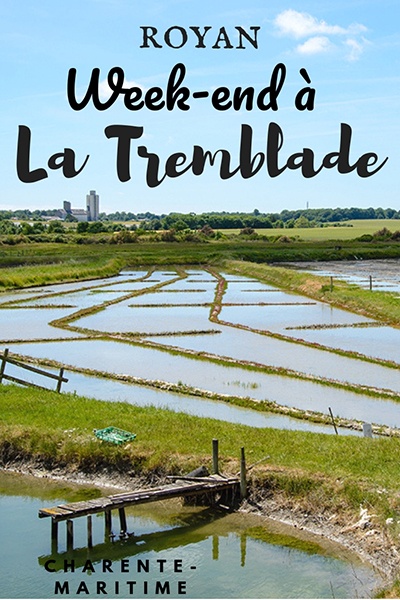
- Chaillevette, home to the Train des Mouettes depot, a shed where volunteers restore stripped-down carriages (you can follow their work every Tuesday on the Trains & Traction Facebook page). In this little oyster-farming village on the left bank of the Seudre, you can taste fresh oysters while watching the oyster farmers at work in the claires (oyster ponds). A mobile app, “Dégustez au cœur de nos cabanes”, helps you quickly find the huts that are open or offer tastings to the public.
- La Tremblade, our destination, with its future harbour planned on the current market square, and its colourful waterfront along La Grève, lined with oyster huts and lots of little restaurants.


So the Train des Mouettes serves these 4 villages, where you can hop off as you like – just check the timetable in advance. The ride also lets you discover the Charente countryside and its oyster marshes at a gentle pace. Slow-travel fans will love it! (And if you have children, even more so!)
Good to know: the Train des Mouettes also runs themed events and trips throughout the season.


The oyster huts of La Tremblade and Chaillevette
Oyster farming is an integral part of the heritage and landscapes of the Charente-Maritime and the Royan area. Oyster marshes are everywhere, and you really must take the chance to learn more about this job – another one driven by passion – whether or not you like oysters. I speak from experience: I’m the girl who visits the Guinness Storehouse in Dublin, a distillery in Scotland and a pastis maker in Marseille… without drinking a drop of alcohol! And those were personal trips, nothing to do with the blog. When I travel, I love learning how local specialities are made and understanding their roots in the region… Once again, I arrived at Fabien Gautret‘s as a complete novice, as I don’t normally eat oysters. Aymeric doesn’t really like them either. So we were starting from zero!

Fabien Gautret
Poor Fabien had to explain his job to us from the very beginning… He took us from one area of his farm to the next, showing us the different types of ponds needed to raise oysters, the supports they grow on, the machines used at each stage, and the challenges facing the industry today…


It takes an oyster farmer at least 3 to 4 years to get an oyster onto your plate: 4 years of collecting, growing, sorting, setting the bags in the water (by hand, the old-fashioned way, at Fabien’s) and then finishing. All that time, the oysters have to be protected from predators, disease and the weather! The job demands rigour, science and organisation, and it’s far from easy… Once harvested, the oysters must be separated and cleaned, any bacteria removed, and then graded and prepared for sale.

One farm, many different areas…
In short, growing oysters requires real know-how and plenty of knowledge to produce a healthy, high-quality product.
After a shucking workshop (see the video), Fabien also let us taste the different varieties of oysters raised on his farm: fine, spéciale, fine de claire… You only live once, so I joined in the tasting and quite enjoyed it… though I’ll never be a big seafood fan. If you’d like to visit an oyster farm around La Tremblade and Royan, we highly recommend Fabien Gautret’s. He’s also a member of the Huîtres Charente-Maritime committee. Many thanks to him for his lovely welcome and a wonderful time together!


Shucking workshop and tasting
The Côte Sauvage by bike to the Phare de la Coubre
We spent a whole day exploring the beaches of the Royan area. We followed part of the Vélodyssée (a cycle route that crosses Brittany and runs down the Atlantic coast to the Basque Country) from Ronce-les-Bains to the Phare de la Coubre. It was quite an adventure, as the company that was supposed to provide our bikes had clearly forgotten about us… Luckily, Loca Services came to the rescue and lent us two bikes so we could stick to our plan. It would have been a shame to miss the glorious sunshine that was forecast.

I loved this gorgeous day, for lots of reasons. For one thing, I badly needed some warmth and a proper dose of green. We pedalled for hours through the pine forest of the Forêt de la Coubre – a treat for the senses, with those views and scents! We didn’t suffer too much from the heat, as the path is partly shaded. Judging by our sunburn, though, don’t forget the sun cream! The path is completely flat, and although we don’t cycle often, we did the 36 km round trip without struggling and with no aches the next day. Which shows that aquacycling is good for something!
Cycling seems to me the best way to follow the Côte Sauvage: it would take far too long on foot and be far too frustrating by car!

By bike, you can wander at your own pace, nose in the wind, without rushing – even with children.
What’s more, bike racks have been installed at each beach, which is really handy! (And if you’re sportier than us, you can always take the mountain bike trails.)
So we stopped at every beach: the Plage de la Cèpe, the Anse du Galon d’Or, the Plage de l’Embellie, the Pointe Espagnole, the Plage de la Coubre… where we had a picnic.
Good to know: in Ronce-les-Bains, you’ll also find the Mus-du-Loup beach.

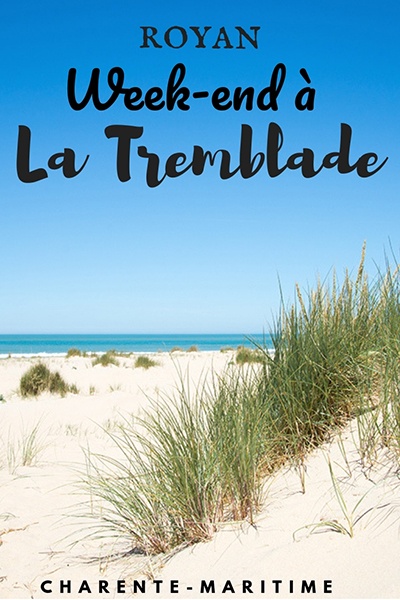
We were amazed to find such wild, unspoilt and sometimes deserted places, like secrets tucked away among the dunes. Stretches of sand as far as the eye can see, melting into the ocean waves. The beaches of the Royan coast are well worth a visit. Most have lifeguards in season, but La Cèpe and L’Embellie don’t. Those were actually my favourites, with their view across to the Île d’Oléron.


Our route took us to the Phare de la Coubre lighthouse, but we didn’t have time to climb it: it was a victim of its own success, with a half-hour wait to get in. Next time! I’d recommend going in the morning if possible to avoid the same problem. We stopped at the beaches on the way there – we should have saved them for the way back! The Phare de la Coubre has watched over the Gironde estuary since 1905 and also warns of dangerous sandbanks that have caused several shipwrecks. It’s the tallest lighthouse on the Charente coast, and those who climb its 300 steps are rewarded with a 360° view over the Côte Sauvage, the Gironde estuary, the Île d’Oléron and the Arvert peninsula…


In short, it’s a must on a weekend around Royan… and we missed it! (Yes, I’m rubbing salt in the wound!)
Where to stay and eat in La Tremblade
Where to eat
Chez Gaby
Chez Gaby, Bd Roger Letelié. Everyone we spoke to agreed: if there’s one place you must have lunch or dinner in La Tremblade, it’s this one! On La Grève, the prettiest part of town, Chez Gaby serves a menu that’s both local and original, with its own take on classic dishes. Every plate is an explosion of flavours. I absolutely loved it! The homemade dishes are fresh, tasty and light, made with local produce. Highly recommended! And the interior, all wood and fishing nets, is lovely too!
Prices and menus change, so check the current menu before you go.


Le Ponton, Bd Roger Letelié
Chez Gaby was a revelation, but we also really liked Le Ponton, also on La Grève, with its mussels cooked on the plancha before your eyes and its festive atmosphere: small bands play there at weekends.
The mussels were tempting, but they came with garlic, which I don’t like. So I happily went for an excellent galette (savoury buckwheat crepe) instead. The people around me know my passion for crepes, sweet or savoury!
The welcome is warm, the terrace lovely in the evening and the food homemade. What more could you want? We recommend it too!

Where to stay
La Belle Époque
We stayed at La Belle Époque (29 rue Foran), a small, friendly, family-run Logis hotel where, as everywhere in the Royan area, we were warmly welcomed. To quote a very surprised Aymeric: “They’re as friendly here as they are back home!?” We were stopped in the street several times, sometimes for tips, sometimes for a joke, or to talk about Aymeric’s “Haut&Fort” T-shirt (a Hauts-de-France brand). The people of the Charente certainly seem very warm, as I said in my introduction.
Back to the hotel: we didn’t need to count sheep to fall asleep at La Belle Époque after our long days.
The bed was very comfortable, apart from pillows a little too flat for my temperamental neck! The recently renovated hotel was spotless, and our room was spacious and well located, a stone’s throw from La Grève, with a large car park for those with a car. Breakfast was generous and fresh. Thank you for a perfect little stay!
Good to know: the hotel still welcomes guests in La Tremblade and also has a restaurant. Check availability and prices for your dates.

Where to buy picnic supplies
Boucherie de la Seudre, 6 rue Foran, La Tremblade


Strolling along La Grève, La Tremblade
Where to hire bikes
Loca Services: 23 Avenue du Monard, 17390 La Tremblade

What to do around La Tremblade: Royan and the area
Don’t miss the 1950s-style seaside resort of Royan, a day or two on the Île d’Oléron, the cave dwellings in the cliffs at Meschers and the Grottes du Régulus, the Romanesque church of Talmont, the Maison de l’Estuaire in Saint-Georges-de-Didonne, or walks around Saint-Palais-sur-Mer…
Continue your trip in the Charente-Maritime
FAQ – Visiting La Tremblade and the Royan area
What can you do in La Tremblade over a weekend?
I recommend combining La Grève and its oyster huts, the Train des Mouettes, a visit to an oyster farm and a day cycling the Côte Sauvage to the Phare de la Coubre.
How many days should you spend in La Tremblade?
Two days are enough to enjoy the main highlights. With three or four days, you can add Royan, Mornac-sur-Seudre or the Île d’Oléron without rushing.
Is the Côte Sauvage easy to explore by bike?
Yes. The cycle paths cross the Forêt de la Coubre and lead to several beaches and the Phare de la Coubre. It’s one of the best ways to discover the area.
What is there to do around La Tremblade?
You can visit Royan, Mornac-sur-Seudre, Talmont-sur-Gironde and Meschers-sur-Gironde, or spend a day on the Île d’Oléron.
Is La Tremblade good for a nature weekend?
Yes. With the ocean, pine forest, oyster marshes, bike rides and villages along the Seudre, it’s perfect for a nature-focused, slow-travel stay.
Any other ideas to recommend?